

How Hungary is paving the way towards tax education
The National Tax and Customs Administration (NTCA) in Hungary is making great strides to ensure young people in the country understand the importance of taxes.
Since the launch of the TAXEDU digital platform, the NTCA management and trainers have been working towards its promotion and use in tax education. From the vey onset, news about the platform was published on NTCA’s intranet website, raising awareness among staff and providing them with up-to-date information. In addition, the TAXEDU platform has been promoted during all tax education trainings.
To reach a wider audience, the platform was also presented at various professional and scientific conferences as well as at working visits - when a delegation visited the NTCA.
As part of other promotional activities, the platform has also been showcased at the NTCA’s Museum of Customs and Taxation History as part of the popular Museums’ Night. In fact, it is a permanent feature of this museum and is used as part of educational activities.
The National Tax and Customs Institute of Training, Health and Culture also received 14 Mobility era games – a European tax board game with the aim of educating young learners about taxes in a fun and engaging way.
Future initiatives
The NTCA has prepared their “Tax awareness Strategy 2020-2024” which includes the promotion of the TAXEDU platform. As a part of this strategy, an action plan was created with concreate actions about how the platform will be promoted.
Training programmes for young students, for example, are currently being created which will include the promotion of the TAXEDU platform.
The lesson plans from the TAXEDU website will become part of the guides used to help prepare teachers and students from primary and secondary schools.
The platform will also be actively promoted at conferences which are planned by partner organisations. There are also plans to follow up with conferences for schoolteachers about tax awareness training opportunities, strategy, methods and tools. These activities will be realised after the strategy’s approval.
The NTCA, with the help of the TAXEDU digital platform, is ensuring young people learn about the impact of taxes on their lives.

How taxes help rightly inform the public on COVID-19
Taxes are being used to help government’s fund public information campaigns aimed at keeping citizens safe during the coronavirus pandemic.
The coronavirus pandemic has not only raised concerns over the health of citizens and the economy, it has also triggered a dangerous wave of false and misleading information that has the potential to damage public health and social cohesion.
“Disinformation in times of the coronavirus can kill. We have a duty to protect our citizens by making them aware of false information and expose the actors responsible for engaging in such practices," noted Josep Borrell, High Representative/Vice-President of the European Union.
Disinformation examples
A range of false and misleading claims have arisen during the pandemic. According to one conspiracy theory, 5G installations would help spread the virus. When in fact, there is no connection between 5G and the coronavirus as the virus itself is spread from one person to another through droplets that people sneeze, cough or exhale. Whereas 5G, a new generation of mobile network technology, is transmitted over non-ionising radio waves.
There are even claims that drinking bleach or pure alcohol, harmful actions, could cure the coronavirus. According to Belgium’s Poison Control Centre, there was an increase of 15 % in the number of bleach-related incidents.
Addressing disinformation head on
The EU has increased its efforts to tackle disinformation, while protecting the freedom of expression, to ensure citizens are correctly informed about the pandemic.
On 1 June, the European Commission launched the European Digital Media Observatory. This project will provide a hub for fact-checkers, academics and other relevant stakeholders to collaborate with media to try and fight disinformation. The Commission plans to launch a 9 million euro call for proposals to create regional media hubs later this year.
The European Commission has also published a dedicated coronavirus response website that provides real-time information on the virus and the EU’s response. There is a dedicated coronavirus disinformation section which provides rebuttals of myths surrounding the virus.
In addition to this, the Commission developed measures to tackle disinformation. As part of this initiative, EU institutions are raising awareness of the dangers of disinformation. They have also encouraged online platforms to contribute to the fight against disinformation. Twitter, for instance, has challenged more than 3.4 million suspicious accounts targeting coronavirus discussions. Facebook and Instagram have directed more than 2 billion people to resources from health authorities, such as the World Health Organization, through their COVID-19 Information Centre.
The TAXEDU digital portal
Collected taxes are being used in many ways to help protect society, such as fighting disinformation. Students across the EU are also learning about other ways taxes are being used to make their lives better through the TAXEDU digital platform. The platform boasts a range of interactive and exiting tax-related resources which are helping to educate the next generation of taxpayers.
Taxes are helping to protect our wellbeing and future.

Join the thousands of followers on TAXEDU’s social media accounts
Keeping up to date with all the latest TAXEDU news and developments has never been easier thanks to Facebook and Instagram.
The TaxEduportal account on Facebook currently boasts over 15 000 followers and on Instagram this number is 2317.
Such a following is attributed to the interactive and visually pleasing posts targeting teachers and students involved in tax education across Europe.
When it comes to interaction, teachers have been the most active with posts related to TAXEDU’s Teacher’s Corner – a popular section on the digital platform.
It is home to a variety of multilingual microlearning and e-learning resources, detailed lesson plans and story boards to help teachers deliver tax lessons that best suit their students’ needs in a fun and engaging way.
Students, on the other hand, have primarily interacted with explanatory and educational posts as well as posts and Instagram stories about 2QT – an extra-terrestrial robot who came to Earth to start a business and learn more about taxes.
It is through his adventures that students learn more about taxes and their importance. 2QT is a key feature of TAXEDU'S microlearning clips found on the Teaching Catalogue.
Both teachers and students have also enjoyed posts about Taxlandia, an educational SimCity-style game app developed to explain and promote tax education to young people.
Why should you become a follower?
Posts on these social media platforms occur two to three times a week.
This ensures those who follow TaxEduportal on Facebook and Instagram receive all the latest TAXEDU news from across Europe.
This is particularly useful as the TAXEDU digital platform is continuously enriched with news and events coverage from teachers and national tax administrations.
Posts also include videos, stories, quizzes, polls and other fun content that followers can interact with and share. In other words, there is no shortage of lively interaction among followers.
For those who have not done so already, find and follow @TaxEduportal on Facebook and Instagram and be one of the people in the know!

Latvia in the spotlight
Educating the next generation of taxpayers is one of the goals of Latvia’s state revenue service.
Doors of the Latvian state revenue service are always open to the young and curious. However, recently in addition to the regular school children excursions and special events, the revenue service has been exploring new ways to reach its audience online.
One such way was through the short film competition “Me - a tax vlogger” (latvian – “Es – nodOKļu vlogeris”), one of the very first digital activities. Those aged between 16 to 19 were invited to create short educational videos on taxes, thus encouraging them to explore, learn and understand taxes and the underlying purpose of the tax administration. Creators of the best videos received digital prizes – laptops, tables or smartwatches. The state revenue service, on the other hand, received confidence that young people have enough creativity, motivation and wisdom to talk about taxes in a fun and engaging way. The playlist of the winning videos is still available on YouTube. These videos have been used in various educational events and lectures given by the tax administration.
Encouraged by the results of the first contest, the tax administration intends to organise such competitions in the future.
First steps to introduce tax education in schools
As part of the “Ready for life” (Dzīvei gatavs) programme, school children in Latvia from grades eight and nine are learning more about taxes. Guest lecturers, which include representatives from government organisations, NGOs and private enterprises are taking part in the programme by giving lectures to explain the link between what students learn in school to what they do in their line of work. This programme was created by an education NGO. In its first year of operation, the tax administration gave 50 lectures. This programme helps to integrate tax education into regular school programmes.
The state administration continues to organise special events at its own premises as well. Each year, the administration organises open door days. During these days, school groups are invited to interactive lectures highlighting the work of the tax administration. This includes a demonstration of the equipment used by a customs officer, meeting working dogs and participating in a game to recognise counterfeit and restricted goods smuggled over borders.
A closer look at Poland’s tax education activities
Poland is making great strides in building a tax culture among young people.
Poland’s Ministry of Finance is promoting and using the TAXEDU digital platform, a European Union pilot project with the aim of educating young European citizens about tax and how it affects their lives, through their webpage and educational initiatives.
Active in finance programme - Finansoaktywni
Finansoaktywni (Active in finance) is an educational programme of the Ministry of Finance for primary school students and teachers.
The educational mission of this programme changes every year: 2015 - Taxes, 2016 - Budget, 2017 - Fair payment of taxes, 2018 - Budget. We understand expenses, 2019 - We understand taxes and in 2020 - We plan budget. This year’s mission focuses on budgetary issues and targets students in the 5th, 6th, 7th and 8th grade of primary school.
Students learn about taxes, the different types of budgets and the link between taxes and public expenses. They also gain an awareness of the benefits of paying taxes.
The programme’s lesson plan was developed in cooperation with experienced methodologists and those responsible for creating a new core curriculum on entrepreneurship. In 2019, TAXEDU’s microlearning clip "What is tax" was used in the programme. In the same year, it was reported that the programme reached 30 206 students from 1 743 classes.
Based on a popular formula of learning through play, the programme also has a competition in which teams of up to three students, based on their knowledge of the educational materials, take part in. Pupils have to create a video and prepare an application for a participation budget. Only ten winning teams win prizes and a trip to Warsaw. There is an official award ceremony which takes place at the Ministry of Finance.
Lessons based on the set of educational materials
Free educational kits, for teachers, come with the programme and include lesson plans, educational posters, as well as animated film, multimedia presentation and other auxiliary materials.
The kits are sent by post to teachers who sign up for the programme via the website. Materials can also be downloaded in electronic form. Once ordered by a teacher, the materials can be reused in other classes.
As an immediate response to the lockdown due to COVID-19, the financial education programme, Finansoaktywni, was adjusted so that lessons could be delivered online. Instructions, such as how to use the existing material when conducting a lesson through Zoom or MS Teams, were prepared for teachers. Information was also prepared for students to help them in situations like what to do if a lesson cannot go ahead online. This gave students and parents the necessary support to go through the materials themselves.
Other activities
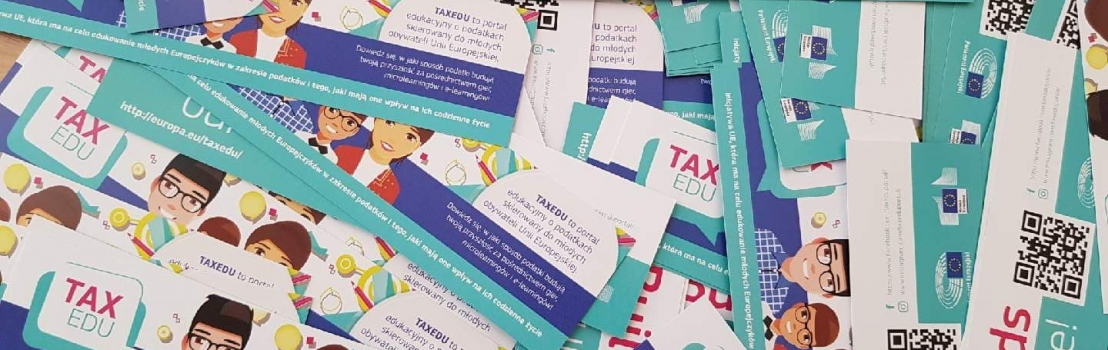
As part of Global Money Week 2019, 100 bookmarks with information about the TAXEDU platform was distributed to teachers.
Additionally, the Ministry of Finance has been adding information about the TAXEDU platform to their Database of educational materials and projects.
The online database supports financial education in schools by offering materials and projects to facilitate the transfer and acquisition of knowledge in this area. The materials are submitted by various entities dealing with financial education including public institutions, industry associations and foundations. Information from the database can be used both in school education and in complementary educational projects carried out by entities and organisations other than schools, e.g. libraries, community centres, community centres, scout teams, interest groups, etc.
A leaflet about the TAXEDU platform was also included in participant packages for the Congress of Financial Education and Entrepreneurship in March 2019, in Warsaw. This event is the most important forum in Poland to discuss, exchange experiences and establish cooperation between all key entities responsible for the implementation of tasks resulting from economic education among various social groups.
Further to this, 100 leaflets on the TAXEDU platform were handed out to participates and teachers at the 16th International Scientific Conference "The role of Entrepreneurship Education in the Socio-Economic and Cultural Development" and 12th Convention of Entrepreneurship Teachers in October 2019, in Kraków. Leaflets with information about TAXEDU were also inserted into the newspaper "Active School”. About 6 000 copies were circulated thanks to the cooperation of the Warsaw Institute of Banking.
The Finance Ministry has also been using educational materials from the TAXEDU platform for school trips. Younger visitors, for example, watch microlearning clips featuring 2QT and talk about the issues raised in these clips.
What’s to come?
In 2020, communication activities aimed at promoting the TAXEDU platform include inserting bookmarks with information about TAXEDU to the 530 educational kits for teachers involved in the Finansoaktywni programme.
Also, the distribution of 100 bookmarks with information about the TAXEDU portal was planned for Global Money Week 2020. Unfortunately, the programme was cancelled due to the lockdown.
Furthermore, school trips will include educational material from the platform and there are also plans to distribute the board game “Mobility era”.
Poland is helping to spread awareness about the importance of taxes.

Some small steps to promote the TAXEDU platform in the COVID-19 era
The COVID-19 pandemic has changed the way we work. Millions of people are now working remotely as countries implement physical distancing measures. Taking advantage of this, we have found a way to further promote the TAXEDU digital platform.
Being registered in over 40 educational groups on Facebook with many teachers and parents as members, we have successfully managed to promote the TAXEDU platform which aims to build a tax culture among young people.
We thought about making the most of our time and we are waiting to move on online, using all channels. We will keep you posted!
Also, we made a small national radio intervention at the end of January. We are looking forward to taking new steps in the media.
Award-winning Spanish students learn about taxes the fun way
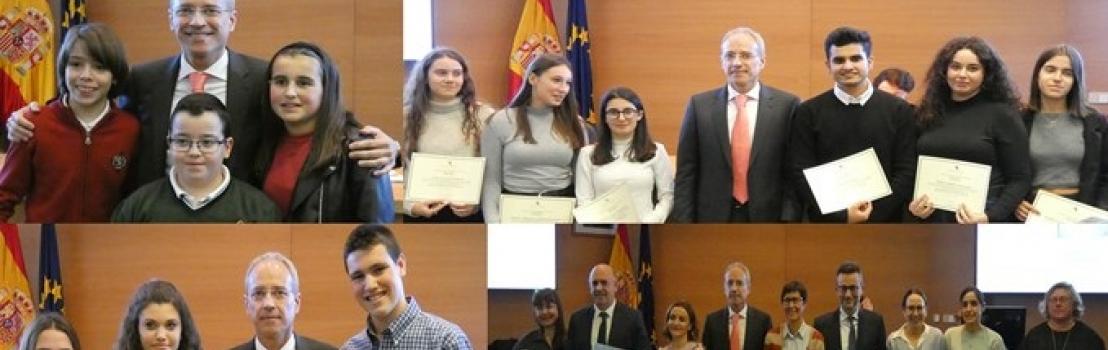
For the past 10 years, Spain’s Tax Agency has presented annual awards to dozens of students who have gained the highest marks in creative writing, drawing and art competitions on the theme of tax and ethics.
These photos were taken at the 2019 Awards Ceremony with teachers and award-winning students. The picture bottom right shows students holding a boardgame designed to teach ethics and civic values, as these relate to taxation duties and obligations, in a fun way. Jesús Gascón, director general of Spain’s Tax Agency, presented the awards to the students. Congratulations!

Taxes are protecting the health of European citizens
Taxes help to ensure Europe has effective, accessible and resilient health systems in the digital era. The aim of this thematic pack is to raise awareness on how taxes provide and support health and care services, including digital services, and the role of the TAXEDU digital portal in contributing to tax lessons on this topic.
Read more:
• Taxes help to bring health services into the digital age

Taxes help to bring health services into the digital age
Providing European citizens with access to safe and high-quality digital services in health and care is just one of the ways collected taxes are being used.
The European Union is working on the digital transformation of health and care services for its citizens. Such a transformation in a digital single market, will benefit people, healthcare systems and the economy. It can help increase the well-being of millions of citizens and drastically change how health and care services are delivered to patients.
Digital transformation can also help ensure the continuity of care across borders, the prevention of diseases, and the reform of health systems.
The Commission’s Communication on Digital Transformation of Health and Care in the Digital Single Market identifies three priorities of the transformation. The first is that citizens’ have secure access to their health data, including across borders. The second priority is personalised medicine through a shared European data infrastructure. This would allow researchers and other professionals to pool resources. The final priority is to empower citizens with digital tools for user feedback and person-centred care so that they can look after their health. This would also stimulate prevention and enable feedback and interaction between users and healthcare providers.
The tools changing health services
Digital technologies, such as 4G/5G mobile communication, artificial intelligence and supercomputing, are key to transforming how we receive and provide health and care services. They can enable innovative approaches that will allow for independent living, translate scientific knowledge into helping citizens maintain good health, improve the use of health data in research and innovation to support personalised healthcare, aid early diagnosis of diseases and more effective treatments.
Supporting this transformation, the Commission proposed the Digital Europe programme for 2021-2027. This will be the first EU programme entirely dedicated to investments in key digital areas. A budget of € 9.2 billion is planned to fund projects in the areas of supercomputing, artificial intelligence, cybersecurity, advanced digital skills and ensuring a wide use of digital technologies across the economy and society.
Building a tax culture
Educating students about how taxes can be used for the good of society, as in the case with Europe’s journey towards the digital transformation of health and care services, is not only important - it is necessary. Thanks to the TAXEDU digital platform, teachers have a range of engaging resources that are available at the click of a button. These resources, including microlearning and e-learning clips, bring lessons to life and help students make the connection between collected taxes and the services they use on a daily basis.
TAXEDU is helping to build a tax culture among young people.

Can tax help protect the environment?
This thematic pack focuses on environmental taxes and how they can help preserve the environment, discourage behaviour that can negatively affect it and contribute to a healthier planet and citizens.
The pack’s main focus is on pollution, the fight against plastic bags, climate change and the how the TAXEDU digital portal can assist students and teachers in their lessons on this topic.
Read more: