

Portugal shares its expertise in Tax Citizenship Education
Thanks to Portugal’s tax administration – a pioneer in tax education – the country counts numerous good practices.
It all started back in 2007 when Portugal’s Tax and Customs Authority (AT) launched a Fiscal Education working group tasked to raise public awareness about the benefits of paying taxes. Information campaigns were rolled out at numerous schools and various initiatives were undertaken.
A long list of initiatives include an exhibition dealing with Education and Fiscal Citizenship. Also, two comic books were published, Os pesadelos fiscais de Porfírio Zap (Nightmares of Porfirio Zap) and Era uma vez no planeta do respeito por todos (Once upon a time on the planet showing respect for all). Both showed the negative impact of tax evasion.
Steady in its fight against tax evasion, Portugal also focussed on boosting tax compliance. In 2013, it launched the "Project for the Improvement of Tax Compliance (PMCF)". This started as an information service for taxpayers and was later incorporated into the "Tax Citizenship" programme.
Portugal also showed that the involvement of its youngest citizens is paramount with Tax Bem, a game which teaches children about taxes in a fun way.
"Contribute to a better society" became the motto of a new generation thanks to the involvement of AT which created this slogan, as well as a “Fiscal citizenship” logo.
Bringing tax education to the next level
With the launch of the TAXEDU portal in 2017, Portugal quickly took the lead in promoting the new portal, firstly on the AT’s intranet and on a webpage about Tax Citizenship.
To reach students, a pilot project "AT in contact at Universities" undertook the promotion of TAXEDU. With this in mind, representatives of AT attended numerous events, like job fairs, and met with more than 1 500 students.
Online campaigns were also organised. For instance, AT promoted on social media the “Tax Citizenship initiative”, reaching millions of citizens via newsletters, Twitters posts or information bulletins (Boletim Informativo).
Portugal’s experience and expertise on tax education and tax citizenship has stretched beyond the country’s borders. Officials have been invited to attend conferences organised in Angola and Cape Verde.
Stay tuned!
AT will continue with the organisation of information sessions about taxation.
Want to learn more about activities led by Portugal in promoting TAXEDU? The Tax and Customs Authority provides an overview in the report Contributos para a Cidadania e Educação Fiscal (in Portuguese).
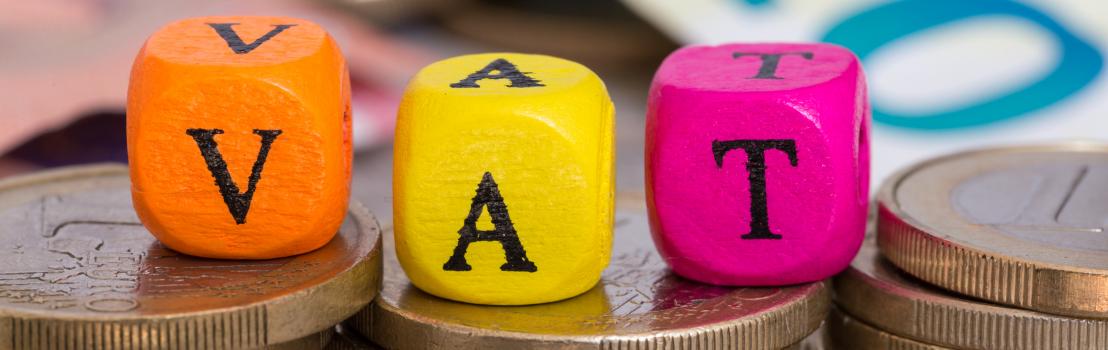
EU VAT gap likely to be impacted by COVID-19
There’s a huge difference between expected revenues in EU Member States and the revenues actually collected. The coronavirus pandemic isn’t making it easier to shrink this gap.
Fighting tax fraud and evasion remains a top priority for EU member States struggling to shrink a growing Value-Added Tax (VAT) gap, which represents the difference between expected VAT revenues and VAT collected. The economic fallout as a result of Covid-19 is making it harder to reverse this trend.
The situation is explained in the European Commission’s Study and Reports on the VAT Gap in the EU-28 Member States (2020 Final Report). In total, EU countries lost an estimated EUR 140 billion in VAT revenues in 2018. There are, however, some disparities among Member States. For example, the estimated VAT gaps ranged from 0.7 % in Sweden, to 33.8% in Romania. The smallest gaps were in Sweden (0.7 %), Croatia (3.5 %) and Finland (3.6 %). The largest were recorded in Romania (33.8 %), Greece (30.1 %) and Lithuania (25.9 %).
For 2020, the report forecasts a potential loss of EUR 164 billion, because of the effects of the coronavirus pandemic on the economy. What’s more, if the EU economy contracts by 7.4 % in 2020 and the general government deficits raises, the gap could increase by 4.1 %.
“Today’s figures show that efforts to shut down opportunities for VAT fraud and evasion have been making gradual progress – but also that much more work is needed. The coronavirus pandemic has drastically altered the EU’s economic outlook and is set to deal a serious blow to VAT revenues too. At this time more than ever, EU countries simply cannot afford such losses. That’s why we need to do more to step up the fight against VAT fraud with renewed determination, while also simplifying procedures and improving cross-border cooperation,” Paolo Gentiloni, European Commissioner for Economy, was quoted as saying.
Reforming the EU VAT system
Solutions to improve the VAT Gap have been listed in the Commission’s proposal to reform the EU VAT system:
- VAT will be charged on cross-border trade between businesses;
- Traders will be able to make declarations and payments using a single online portal according to the same rules and administrative templates as in their home country;
- The final amount of VAT will always be paid to the Member State of the final consumer and charged at the rate of that Member State;
- Invoicing rules will be simplified.
The EU tax package recently published proposes also solutions to help boost VAT compliance.
How is VAT paid and collected in the EU?
Learning about VAT is easy on the TAXEDU portal. Teachers looking for activities aimed at helping students understand the concept can show this micro-learning clip starring 2QT!
Teachers and students can also browse other digital resources on the TAXEDU website. There’s even an entire lesson plan What happens if you don’t pay your taxes, which sheds light on the “shadow economy” and the consequences of tax evasion.

Slovakia, a pioneer in financial literacy
Financial literacy is a top priority in Slovakia. The country as undertaken numerous initiatives in this field, and TAXEDU has helped it along the way.
Slovakia has shown a growing interest towards financial literacy, which is recognised among the most important determinants of financial well-being. It started with the publication of a resolution introducing financial management into the national education strategy.
Resolution No. 447, known as the National Standard of Financial Literacy, was published on 2 July 2008. It states that the Deputy Prime Minister of the Slovak Republic and the Minister of Education are in charge of elaborating the standard of financial literacy and to implement the strategy of education in the financial area and management of personal finances.
The resolution was updated in 2013 when the Ministry of Education submitted to the government a report on the state of education that aimed to support the development of financial literacy. It was subsequently recommended that teachers in Slovakia should know the basic rules for personal financial management, to use financial services effectively and to understand basic definitions in the area of finances.
To make sure teachers and educators accomplish their mission, the resolution also outlines rules for evaluation.
Financial literacy committee
What is more, Slovakia also created a financial literacy committee within the Ministry of Education, which gathers governmental and non-governmental organisations, banks or insurance companies.
Slovak national authorities joined this committee in 2014, highlighting the importance of financial literacy in education. They also introduced TAXEDU to the other members of the committee in September 2017, further expanding the audience of the web-portal.
Workshops for teachers
Skills in the field of financial literacy are considered an important part of a teacher’s portfolio. On 30 May 2019, the Academy of Financial Administration organised a workshop for teachers and education coordinators. Unfortunately, the lockdown imposed to prevent the spread of COVID-19 has not allowed any physical meetings or other activities to take place in 2020. The Slovakian TAXEDU promoters hope to resume activities as soon as it is safe to do so.
Future workshops will be announced on the website of the Financial Administration.
Public promotions
Since the launch of the TAXEDU portal in 2017, Slovakia has been among its most active fans. A Facebook post about TAXEDU was published on 12 July 2017. More social media campaigning followed suit. Slovakia’s national authorities also showcased the TAXEDU portal in a TV commercial that aired on 24 November 2017. A press release presenting TAXEDU was also disseminated on the “School Service” portal (administered by the public Press Agency of Slovakia) for the attention of educational institutes and school facilities.
Articles were also published on the website of the Methodological and Pedagogical Centre & State Vocational Educational Institute. The online “Teaching Newspaper” also promoted the TAXEDU portal.
In addition to this massive media coverage, Slovakia's national authorities have been in contact with the Ministry of Education to help promoting TAXEDU among school.
Useful resources
Read the news item presenting the workshops organised by the Slovak Financial Administration.
Browse our training catalogue in tax education.

Education in the age of COVID-19
The COVID-19 pandemic resulted in global school closures across Europe, but learning did not grind to a halt since lessons moved online.
The outbreak of COVID-19 in Europe has been met with measures to ensure the continuity of education and training activities. Schools took to the internet and teachers tailored lessons for online learning.
Since the COVID-19 lockdowns, teachers around Europe have scrambled to find alternatives for traditional in-class programmes. Moving classes online and the development of e-learning content that is engaging became the new norm in all EU Member States.
“The COVID-19 outbreak has reminded us that, despite differences in national systems, Member States share similar challenges,” said Mariya Gabriel, EU Commissioner for Innovation, Research, Culture, Education and Youth. She was addressing Members of the European Parliament during a videoconference about the European Education Area.
“As you know, the Commission plans to adopt the new Action Plan in September,” Gabriel told MEPs. “It will present a set of measures aimed, among others, at strengthening the digital capacities of education systems, building digital literacy and creating a digital support ecosystem. In order to benefit from the lessons learned in the crisis, I have launched an EU-wide open public consultation on the Digital Education Action Plan. I count on your help to promote the consultation as broadly as possible.”
Eventually, this plan will contribute to shape a European Education Area by 2025.
‘No pupil left behind’
“Across Europe, pupils from vulnerable socioeconomic groups had difficulties accessing online learning. Some of them simply lost three months of education. We cannot leave these pupils and students behind. This is why inclusion will be one of the priorities of the European Education Area in the coming years,” said Gabriel.
A financial support will therefore be available to enhance inclusion. “For all this to happen an adequate level of investment will be key. We need to match our ambition with adequate funding. The Commission proposal for a recovery instrument, the Next Generation EU, will unlock 750 billion EUR,” added Commissioner Mariya Gabriel.
The digital transformation of education systems across Europe hinges on Member States’ commitments. Governments are responsible for ensuring the provision of accessible quality education. Income tax is the primary source of revenue governments use to invest in education.
No doubt COVID-19 has made it more important than ever to assist schools not only cope during the pandemic, but continue to excel.
Online resources
To help teachers address the numerous challenges related to online teaching, the EU has published plenty of resources online:
- School Education Gateway: online catalogue of teaching materials and training opportunities for teachers
- eTwinning: collaborative European platform for teachers
- Learning corner: teaching materials to help pupils of all age groups discover the EU
- SALTO-YOUTH: EU-supported online platforms for teachers and educators
- European electronic platform for adult learning: online community connecting adult learning professionals
- Erasmus+ Virtual Exchange: online virtual exchange opportunities for young people
- European Institute of Innovation and Technology: resources supporting the provision of quality online teaching and learning by higher education professionals
- EU code week: grassroots initiative related to coding, programming, computational thinking and digital literacy
The purpose of these resources is to connect educators and learners, to make information and environments accessible and to support continued professional development of educators. In addition, the resources of EU-funded projects can also be used by teachers in the framework of their lessons.
TAXEDU lesson plans
The TAXEDU portal is also a great place for teachers to find interactive resources. It’s full of ready-made lesson plans for teachers. Each lesson plan includes a description and specific objectives, as well as suggestions about activities and how teachers can use the lessons in their class.
What’s more, the lessons can be used to inform students about the many ways collected taxes are used to help fund education, from kindergarten to university. They can learn about how taxes are used to make their lives better through the TAXEDU digital platform.
The platform offers a range of interactive tax-related resources which are helping to educate the next generation of taxpayers. Find out how everyone benefits from taxes with TAXEDU’s 2QT robot.

Bulgaria brings tax education to schools
Since the launch of TAXEDU in 2017, Bulgaria has been promoting tax lessons as an official part of the school curriculum. Now it’s time to celebrate achievements.
Thousands of students in Bulgaria have been learning about tax education with specially designed lessons incorporated into the regular curriculum. Measuring its impact is now the next step.
In 2020, the country’s school officials will evaluate the results. They will assess how tax education curriculum has benefited classrooms nationwide. This is a natural step following three years since the country’s launch of the TAXEDU portal in Bulgaria.
The TAXEDU portal’s linguistic diversity has certainly helped the country’s contribution to the fiscal education of the next generation of European taxpayers. Nearly all the material and resources available on the portal is also available in Bulgarian.
Overall, the promotion of TAXEDU remains a priority for Bulgaria. The country’s teachers are actively encouraged to make maximum use of the TAXEDU portal by taking inspiration to prepare and tailor their lessons on tax education. To facilitate this process, Bulgarian officials will ensure the national tax education portal contains ample references to TAXEDU, so that users can easily navigate between sites.
Movie-making for the classroom
Audio-visual activities top Bulgaria’s list of priorities to make tax education attractive to the next generation of taxpayers. The production of a series of diverse videos is underway with the aim of streaming them in the classrooms.
Bulgaria will also work on disseminating short videos (with subtitles) among opinion leaders with the aim of activating the school community and enhancing the public’s engagement towards tax education.
In addition, communication campaigns targeting Bulgarian youth will be launched. These too will be subsequently evaluated in order to measure their successful impact and optimise future activities.
NEW METHODOLOGICAL MATERIAL FOR EDUCATION ON TAX AWARENESS IN LITHUANIA
Raising taxpayer awareness is a challenge that the whole Europe is facing. Lithuania is no exception. Taxes are an area that is very overgrown with stereotypes and prejudices. “What is the benefit of taxes for me?" is a question frequently asked by the citizens and all you have to do is keep quiet because it is clear from the tone of the question itself that no arguments will work here. The person already has his opinion, and has had it for a long time since his parents told him that taxes are a “tribute to the state.”
This example not only shows the importance of awareness-raising, it also reveals two important aspects: the first one is that we rise up against stereotypes and deep, negative attitudes, similar to the idea that all athletes are stupid; the second one is that these attitudes are formed during childhood, so the main educational activity must be aimed at young people, without forgetting adults.
In order to find suitable methodological material, the State Tax Inspectorate (hereinafter - STI) together with Vilnius University conducted large-scale research. The aim was to find out what children know about taxes and what their attitudes towards taxes are. The study lasted from 2016 to 2019. Almost 2.000 students from the age of 7 to 17 participated in the research and were divided into three groups according to their age. Various measures were used during the research: (direct intervention) presentation or a lesson on taxes, (indirect intervention) games, cartoons, examination of situations, which reflect that non-payment of taxes causes significant harm and the payment of taxes brings benefits to society. It should be noted that knowledge of taxes has improved after direct intervention, while attitudes towards taxes have changed regardless of form. The most positive approach to taxes was driven by the emphasis on negative consequences.
First of all, the STI started to prepare methodological material for young people. There are many challenges here because young people are very receptive to innovation and each new generation is already different from the previous one, so we need to be very modern in order to reach young minds. The simplest measure to use - presentations. Children are familiar with them since primary school and easily accept and understand the material presented. In fact, a good, illustrative and interesting presentation can be the best measure and there is no need to “reinvent the wheel”. However, no matter how good the presentation is, it is unable to keep the attention of the primary school children throughout the lesson, although for high school students, the presentation may be exactly what is needed. So, it is quite natural that we have grouped all the methodological material into groups according to classes: Students of 2-4, 5-8, 9-12 classes.
Most of the new measures were developed specifically for primary school children. In addition to the usual measures such as educational videos, it is worth mentioning the simulation game. This is a kind of situation where children are invited to speak. For example, it tells how children in the yard played football and one of them got injured. The children called an ambulance, but it did not come. Children are explained why an ambulance can come in general and what charges are imposed here. Another measure - a drawing competition. The children are told that a lot of money has been raised in the budget and that something can be done for the benefit of all, and their task is to draw what can be done using the money.
In addition, we plan to acquire representative long-term impact measures such as “connect the dots” books and colouring books. These are books where the payment of taxes will be depicted in beautiful images and will create positive associations. It is a more like a representative measure. The lecturer would take the books as gifts for the children at schools. The child will use the colouring book at home for a week or more and thus will develop positive associations with the payment of taxes.
A group of pro-gymnasium students are young people who have something to say on various topics. We divide their lesson into two parts. The first is informational. During it, we show a presentation or a video from the TAXEDU website (this website contains a lot of amazing material in all EU languages). In the second part, we use the “discussion club” or “mindfight” measure to select topics and questions according to age. The "mindfight" can be particularly suitable and can be used in two ways. Sometimes a lecturer can ask an interesting question and then gives an interesting answer. At the same time conveying a certain message to the children. In other cases, we present the necessary information during the presentation, and during the “mindfight”, questions are asked from the set topic, thus better consolidating the knowledge.
Gymnasium students are another completely different category. Part of the seniors are already earning money and when the lecturer talks about taxes, he talks directly about the lives of those students. Such young people often have specific questions, “How much to pay?”, “To whom?” and “When and how to declare?”. We are not just talking about the benefit of taxes to society. We show what harm he does personally if he receives his salary in an “envelope”, what the circumstances would be if he became ill or if he wanted to use leasing services. While communicating with gymnasium students, the “discussion club” becomes not only a discussion but also a consultation.
This is even stronger in the student group. Before discussing with the students, it is important to keep in mind that we divide this group into two more categories: tax students and others. Tax students are students studying tax law. They are interested in all taxes, their benefits, exemptions, calculations, declarations etc. Other students, these are those who study things like business management and taxes are interesting to them only from a practical point of view. Therefore, the discussion can be, “Which is better - a limited liability company or a small partnership?” Which form of activity is more favourable when talking about the taxes and in which cases? They may also be interested in how individual activity differs from a business certificate. Thus, methodological material is not much-needed in this group, the lecturer needs knowledge to answer the questions that arise.
You may have noticed that the measures discussed above are adapted to work in schools. Meanwhile, the STI looks at everything more broadly and wants to reach young people outside the school. Of course, the main place where young people spend their time is on various smart devices, so we need to be there too and be interesting to the children in order for them to devote at least part of their time to us. For this reason we came up with a game “fight the shadow economy”. Most games related to taxes are prepared according to the principle of question-answer, but we looked at it completely differently. We would like to create a dynamic, engaging game that will give children a good time, while at the same time will break down prejudices and stereotypes about taxes (hopefully we will be able to prepare another article about this game).
In addition to school activities, we have another measure, which has already become traditional - a quiz for students, “Taxes come back to everyone”. The quiz has a large number of participants (over 201 teams from all over Lithuania registered in 2019) and prizes that are attractive to young people. The organizers of the quiz try to reach the most remote places in Lithuania, so the game is first organized online for the whole country and then the strongest teams are selected at the regional level. The country is divided into five counties and a regional final takes place in each of them. The third stage is the grand final, which takes place in Vilnius. The winners from all five counties attend it. All finalists are awarded, prizes are of different value: from headphones to smartphones or tablets.
Another very important activity in educating young people is inter-institutional cooperation. STI together with “Sodra”, Bank of Lithuania, Junior Achievement and other partners prepare material for educational institutions. In Lithuania, the aim is to promote financial literacy, and the goal of the STI is that children not only learn to earn money, but also do not forget about the taxes.
In conclusion, I would like to add another argument, which is influenced by the fact that many people have experienced it personally or at least heard a lot about it. I am talking about business assistance during a pandemic, when many businesses and individual traders approached the state for help. The state could help only because people and businesses paid / are paying taxes. This argument is not a stand-alone measure, but such a message must be spread as widely as possible, both to young people and to adults. I think this is a strong argument that we could use for many years to come, I invite you to do so.

EU tax will support Europe’s economic recovery
To promote economic growth, the European Commission is rolling out a new package of measures to ensure EU tax policy supports fair and efficient taxation between now and 2024.
The European Commission’s ambitious new Tax Package is built on two pillars: fairness and simplicity. Adopted on July 15, it is described as a multi-faced approach to make taxation fairer, greener and fit for the modern economy.
“Now more than ever, Member States need secure tax revenues to invest in the people and businesses who need it most. At the same time, we need to break down tax obstacles and make it easier for EU companies to innovate, invest and grow. Today's Tax Package takes us in the right direction, helping to make taxation fairer, more user-friendly and more adapted to our digital world,” said Valdis Dombrovskis, Executive Vice-President for an Economy that works for People.
One, two, three
The Tax package contains three elements. The first is an Action Plan to make taxation simpler, fairer and better attuned to the modern economy. The second is a proposal for a Council Directive aiming at revising the EU’s Directive on administrative cooperation. This proposal aims to introduce an automatic exchange of information between Member States’ tax administrations for income and revenues generated by sellers on digital platforms and strengthen administrative cooperation. The third is a communication on “Tax good governance in the EU and beyond” that will review progress made in enhancing tax good governance in the EU and outside the EU.
With this new Tax Package, the Commission will be able to focus its action on reforming the Code of Conduct for Business Taxation, reviewing the EU list of non-cooperative jurisdictions for tax purposes and reinforcing tax good governance. It will also support developing country partners to improve tax good governance.
Taxation to the future
The Commission will make proposals to ensure that taxation supports the EU's objective of reaching climate neutrality by 2050. Looking ahead, the Commission also plans to address the challenges of the digital economy and ensure all multinational corporations pay their fair share.
Paolo Gentiloni, Commissioner for Economy, said, “Fair taxation is the springboard that will help our economy bounce back from the crisis. We need to make life easier for honest citizens and businesses when it comes to paying their taxes, and harder for fraudsters and tax cheats. These proposals will help Member States to secure the revenues they need to invest in people and infrastructure, while creating a better tax environment for citizens and businesses throughout Europe.”
Find out more
Check out TAXEDU’s training catalogue. Find out what happens if you don’t pay your taxes. Learn about the ‘shadow economy’ and consider how people can help prevent tax evasion. Watch a 6 minute video about the topic.
How can taxes help bring health services into the digital age? Read TAXEDU’s news item about the European Commission’s Communication on Digital Transformation of Health and Care in the Digital Single Market. Find out how taxes can be used for the good of society, as in the case with Europe’s journey towards the digital transformation of health and care services, is not only important.
Thanks to the TAXEDU digital platform, teachers have a range of engaging resources that are available at the click of a button. These resources, including microlearning and e-learning clips, bring lessons to life and help students make the connection between collected taxes and the services they use on a daily basis.

Tourists as taxpayers
Summer is the season when Europeans get some much-needed rest and relaxation. It’s also a time to pay taxes!
Five out of the top 10 visited destinations in the world were in the EU, according to the latest European Union Tourism Trends Report (2019). Europe has been rated the most visited region in the world by the UN's World Tourism Organization (UNWTO).
The EU tourism ecosystem encompasses many types of businesses, including tour operators, travel agents and accommodation suppliers.
As one of the ecosystems most affected by the coronavirus, tourism this summer will feel and look different. Tourism tax collections can help mitigate the negative effects, helping to further develop the tourism services and improving infrastructure for the future.
Two types of tourism tax
According to the UNWTO, tourism taxes are applicable specifically to tourists and the tourism industry. There has also been a general increase in the number and scope of tourism-related taxes, fees, charges over the last decade.
In most European countries, taxation systems are based on two primary types of taxes: direct and indirect. A distinction can be made between direct taxes levied “directly” on income and (possibly) wealth, and indirect taxes that are levied on the from the purchase of goods and services (e.g. VAT).
VAT is the most commonly paid tax when residents and tourists buy a product or pay for a service – anything from ice cream to a massage. What’s more, VAT is an indirect tax, as it is paid by the buyer to the seller as part of the price.
Member States have to apply the rules of the Directive on the Common system of value added tax. The principle of the common system of VAT entails the application to goods and services of a general tax on consumption exactly proportional to the price of the goods and services.
However, all EU countries have a different VAT rate. The standard VAT rate they apply must be at least 15 %, and the reduced rate at least 5 %.
Some EU countries have decided to reduce VAT to help stimulate tourism growth. For example, in 2009, France reduced VAT in restaurants.
Flying high
Some countries have set up a tax when travelling by aeroplane. In Greece, for example, a passenger tax (Airport Development and Modernisation Charge) was introduced in 2001 on passengers (over the age of five) departing from Greek airports, with transit, and transfer passengers exempted.
In France, the Civil Aviation Tax (TAC) came into effect in 2006 and is payable by any public air transport embarking on passenger, freight and/or mail from the French territory. An air travel tax was also introduced in 2009 on each passenger leaving Ireland by air.
In addition, the German Air Ticket Tax was created in 2011, to promote more ecologically friendly behaviour.
Bed and breakfast
The tax you pay when you spend one night or more in a hotel is called “occupancy tax” (applied in 18 EU countries).
Ireland has been applying this tax since 1939! It is related to registration fees for hotels, guest houses, holiday cottages and apartments, hostels, youth hostels, caravan and camping parks.
In the Czech Republic, a bed night tax is in place to support the development of tourism and to provide funding for towns to help cover the expenses. The current rate for the bed night tax is set at CZK 15 per person per day.
Going green
Green or eco-taxes are being used in a variety of sectors to develop technologies for tourism and consumer products that are more sustainable for the environment.
For example, in 2004, Portugal’s tax for energy efficiency certification and air quality for Tourism Enterprises was introduced to cover any construction, remodelling, leasing and renting of tourism establishments. It is a certification system that aims to provide information about the thermal quality of buildings, in order to ensure energy efficiency and good air quality.
Competitiveness
The impact of Taxes on the competitiveness of European tourism is a 2017 report that highlights how important it is to reduce the amount of taxes on tourists to improve the competitiveness of the sector. There is a dual need to raise revenue and maintain competitiveness. For instance, Members States that tax activities related to tourism also find a balanced way between these two aims.
Would you like to explain what is VAT to your children or pupils? Take a look at our content tailored for young children and teenagers.
Explore with your children or pupils VAT’s benefits with the robot 2QT.
Discover how tax can help protect the environment with your pupils.
More information about tax and tourism in the EU:

Learning about tax is fun for young Slovenians
TAXEDU got a warm welcome in Slovenia! The launch of the portal was followed by numerous activities aimed at increasing awareness about tax education.
TAXEDU is well known among students in Slovenia. More than 10 % of primary and secondary schools across the country have organised at least one event or activity related to TAXEDU, and this number is expected to grow.
Slovenia’s introduction with TAXEDU began three years ago, immediately after the launch of the portal. As many as 5 300 students at 80 schools met with the national administration representatives to learn about this European portal. The conversation about tax education continued online, with numerous schools promoting TAXEDU on their website and own social media channels, especially Twitter.
Making taxes fun
Games and micro-learning modules were most popular among students, especially the younger grades. Schools also organised a variety of events to encourage students to learn about tax by playing these games.
Slovenia’s introduction with TAXEDU began with a pilot event for eight-year old children. They viewed the micro-clip “What is tax” and participated in the related training course. School officials hailed the event as an opportunity to teach young people about the main aspects of taxation and the benefits of contributing to a common good. This 2017 event was repeated in 2019 during which time the participating students also received TAXEDU colouring books.
In 2018, 5 000 youngsters (between the ages of 15 and 18) played the portal’s flagship game TAXLANDIA. They learned the fun way what it would be like to be prime minister for a day. The game showed them how to leverage tax to govern a country and to improve citizen’s wellbeing, as well as to fund maintenance and creation of much needed infrastructure.
Young Slovenians continued playing with the Mobility era games that were distributed in 2019.
Students also had the opportunity to learn how tax is involved when starting a business or finding employment.
Looking ahead
As a pioneer in tax education, Slovenia continues to pave the way among many EU Member States with the introduction of the Fiscal literacy for young people project. The aim is to make sure taxes, as a concept, is understood by children by providing them basic answers to questions such as what taxes are and why taxes should be paid. Similar activities will be organised during the second half of 2020.
TAXEDU is also become more and more digital with an increased activity on social media.
Useful resources
Want to be a prime minister for a day and decide how and what to tax? You can take up the challenge with TAXLANDIA
Looking for informative resources to learn about tax in a playful way? Watch our micro-learning modules

Promoting a tax culture in Italy
Italian officials have been working hard to ensure the next generation of taxpayers understand the importance of taxes.
The Italian Revenue Agency (RA) and the Customs and Monopolies Agency (CMA) have been actively participating in the elaboration, review and validation of the TAXEDU digital portal and its content as well as of the Italian translations of e-learning modules.
Thanks to the efforts of the RA, the TAXEDU portal has been incorporated into the national education programme “Fisco e Scuola” (“Tax and schools”) – which has been promoted in collaboration with the education ministry. Through this programme, official administrators organise meetings with students from primary and secondary schools (6 to 18 years of age) to highlight the importance of paying taxes.
To further promote a tax culture in the country, a link to the TAXEDU portal was added to the Italian National Authority’s institutional website and news items about the portal was published in the online institutional journal FiscoOggi.
The RA also took part in the 2019 edition of the “Financial education month”, an initiative promoted by the ministries of economy and finance, education and economic development, together with other associations of the economic sector.
Further to this, the Italian National Administrations have promoted their initiatives with schools via the publication of news items on the TAXEDU portal. These news items have been translated into English and disseminated thanks to the TAXEDU newsletter. They include: “Italian Revenue Agency among young people at “Palermo Chiama Italia”, “Institutions and young people together for legality”, “The Tour of Legality: An initiative for Sicilian students” and “Tax lessons for Italian children and students”.
Fourteen “Mobility era” games are also being used in schools, giving students the opportunity to test their knowledge on taxation, the English language and geography.
Teachers using the TAXEDU portal were asked to complete a survey about it as well.
Also, because Italian schools were closed due to the COVID-19 pandemic, the RA offices promoted the TAXEDU online materials for distance learning.
Future plans
The CMA is working towards incorporating the TAXEDU portal in a project aimed at secondary school students in their final year called “Alternanza scuola lavoro”.
As part of this project, students will take part in a one-week training programme as well as visit the CMA. During this visit, they will have the opportunity to learn more about the activities undertaken by this agency and hear first-hand from customs officials about the TAXEDU portal and its microlearning clips which deal with the actions and history of their duties.
In February of this year, students from a high school in Rome were set to take part in a five-day meeting at the headquarters in Rome as part of this project. Due to COVID-19, the event was cancelled. It is unknown when the activity will restart.
Italy is building a tax culture!