

Taxes help protect and preserve Europe’s Cultural Heritage
They help fund programmes and public services that are helping to ensure Europe’s cultural heritage is protected, preserved and accessible now and into the future. The aim of this thematic pack is to raise awareness on the issues surrounding cultural heritage and how the TAXEDU digital portal can contribute with tax lessons on this topic.
Read more:

Taxes help bring culture to the people
Everyone has the right to participate in the cultural life of the community and enjoy the arts. Taxes help make heritage accessible.
Europe is renowned worldwide for its cultural heritage – from its archaeological sites, museums and monuments to audio-visual works, customs and traditions. In fact, this heritage has been recognised by UNESCO with 453 inscribed sites in Europe. This accounts for almost half of UNESCO’s World Heritage List.
The right of accessibility
Accessibility to cultural heritage has many dimensions including, but not limited to, physical, intellectual, financial and social ones.
A portion of the taxes collected by EU Member States go towards addressing these dimensions with the aim of reducing accessibility barriers – both now and in the future. Some actions have included providing free entry to certain museums and sites, tax breaks and other types of incentives.
In addition to these, and according to the European Commission report on Cultural Heritage: Digitisation, Online Accessibility and Digital Preservation, Member States are also continuously working on making the most of digital technologies to record, document and preserve Europe’s cultural heritage and make it available online. These include library and archival materials, museum collections and sound and audio-visual heritage. Digital preservation is needed to ensure Europe’s cultural diversity, shared history and values found in the vast and rich collections of Europe’s libraries and museums for example, can be shared and accessible for future generations to come. This is why Member States have established EU-funded programmes for digitalisation.
There are also many other examples of how Member States are ensuring cultural heritage is assessible to all. In Viborg, Denmark, for instance, the city is working on the development of innovative physical and communication measures to improve accessibility and to overcome historical and topographical challenges to its cultural heritage. An app, Spot Viborg, has also been developed to guide visitors through three accessible itineraries in the historic city using GPS tracking, sound and visual aids.
In Monteverde, Italy, there is an infrastructure project that aims to make the city and resources accessible and enjoyable. The project focuses on the cultural, historic and religious heritage of the area, as well as on public services and human needs. As a priority, the project aims to remove all architectural barriers to accessibility around the town and to its cultural heritage sites.
How can taxes ensure cultural heritage is accessible to all?
Taxes help pay for many of the programmes and government services that provide citizens with access to culture.
Students all around Europe can learn more about the positive impact taxes are having on their lives by watching TAXEDU’s microlearning clip, ‘Do I benefit from taxes’ as well as the consequences of not paying taxes though ‘What happens if you don’t pay your taxes’.
The TAXEDU portal is educating the next generation of taxpayers and helping them understand that thanks to taxes, future generations will have access to Europe’s cultural heritage.

Activities developed in the field of Tax Citizenship and the TAXEDU Portal
Education for Tax Citizenship is a concern of the Portuguese Tax and Customs Authority (AT). In fact, as a pioneer in this field, it has been developing actions at the level of the tax administrations of European Union (EU) countries for years. In 2007, a Fiscal Education working group was created to develop material in this area. Theyorganised an exhibition on Education and Fiscal Citizenship which was held at several schools around the country. Two comic books were also published: ‘Os pesadelos fiscais de Porfírio Zap’ (‘Nightmares of Porfirio Zap’) and ‘Era uma vez no planeta do respeito por todos’ (‘Once upon a time on the planet of respect for all’). The books aimed to raise awareness about the importance for all of us to contribute, according to one’s real income, to the general good, highlighting the individual risks and the collective losses of tax evasion. Tax Bem was also created! This is a tax education game for ages 12+. The goal was to go through 70 houses to reach the great Tree of Citizenship. Through the game, children learn more about their tax duties and rights as citizens while having fun. In addition to promoting ‘Tax Citizenship’ among young people and adults, AT has actively shown interest in helping taxpayers voluntarily comply with their tax obligations. For years, AT has explicitly noted its intention in this area in its strategy and activity plans. Recently, work has been undertaken to create the Fiscal Citizenship logo and its slogan “Contribute to a better society”. Both have been used not only as a separator in the Finance Portal (AT website), but also in merchandising and other materials.

Image 1: Logo of ‘Fiscal Citizenship’
In promoting this idea and the TAXEDU portal itself, several initiatives have been developed not only internally but also externally.
Internal communication
In 2017, a Communication Plan was drawn up for the promotion of the TAXEDU portal, since, due to its contents, it was important to promote education for fiscal citizenship.
Already, in 2019, there was wide dissemination of the TAXEDU portal on AT’s intranet and, simultaneously, a web page on ‘Tax Citizenship’ was created. The actions developed in universities through the ‘AT in Contact’ programme were also disseminated and published externally on the Finance Portal.
Consequently, all of these actions are foreseen in AT’s activity plans, and in 2019 this was explicitely stated as an objective: “Collaborate with DG TAXUD in updating the TAXEDU portal and collaborate with DSCPAC (AT’s Communication Department) in disseminating the use of the portal in the context of promoting fiscal literacy.”
External Communication
One of the areas of intervention was the ‘Project for the Improvement of Tax Compliance (PMCF)’, created in 2013, with a view to facilitating and helping taxpayers who intend to meet their tax obligations.
With the restructuring of AT, this pilot project was integrated into the scope of ‘Tax Citizenship’ (2016) and extended to other colleges and vocational schools.
In this context, the pilot project ‘AT in Contact’ at universities emerged, carrying out awareness-raising and clarification actions in colleges and professional schools. At these venues, AT has a space dedicated to the promotion of the TAXEDU Portal.
At the same time, AT invested in its presence at job fairs, colleges and vocational training schools to create a relationship of trust with and proximity to citizens.
Between 2017 and 2019, as part of the ‘AT in Contact’ project, AT participated in 24 actions where more than 1 500 students were present. One such event was held in Lisbon in October 2019.

Image 2: Instituto Superior Técnico of Lisbon – 18 October 2019
To reinforce the idea of Fiscal Citizenship, AT acquired small merchandising gifts with the logo, to be distributed at presentations, workshops and job fairs, which are usually held at universities and professional schools.


Image 3: Merchandise
The contents of Tax Citizenship and TAXEDU have been disseminated through Twitter, our internal television circuit and, in a more expansive way, through our Newsletter and Bulletin (Boletim Informativo), reaching millions of citizens.
The theme of Citizenship and Tax Education was presented at conferences held in various Portuguese-speaking countries, namely Angola and Cape Verde. AT participated in two congresses and, in its presentations, mention was made of the importance of the TAXEDU portal.
In addition, within a more academic scope, the report ‘Contributos para a Cidadania e Educação Fiscal’ was produced. This report provides a history of the work done by AT for the promotion of Tax Citizenship and Fiscal Education and also for dissemination of the TAXEDU portal.
At the television level, the ‘Fatura da Sorte’ (‘Lucky Invoice’) draw aims to reward taxpayers’ citizenship, the fight against the black economy and the prevention of tax evasion, with the aim of creating a more equitable tax system.
Thus, every Thursday afternoon, it is broadcast on Portuguese public television — RTP1.
In this programme, in addition to the disclosure of the winning coupon, information on the different tax and customs issues relating to tax obligations are disclosed, as well as news of interest to taxpayers.
Similarly, RTP presenters always refer to the duty of tax citizenship, appealing to viewers to always demand an invoice with the respective tax identification number (TIN).
Three programmes have already been broadcast and have specifically addressed the topic of Fiscal Citizenship and made reference to the TAXEDU portal. The three programmes added brought 1 million viewers. They were broadcast on 27 September 2018, 8 August 2019 and the 26 August 2019.

Image 4: ‘Lucky Invoice’ – on Thursdays, on RTP1 (Portuguese public TV)
Finally, it is important to mention the work developed by AT in order to celebrate protocols with other entities, in order to disseminate the concept of Tax Citizenship, namely with the Directorate-General of Education (DGE) and also the Directorate General of Higher Education (DGES).
Conclusion
For many years, AT has been developing strategies and actions in the field of tax education and in promoting voluntary compliance by taxpayers.
In the various age groups, students are the key audience of the ‘Education for Fiscal Citizenship’ actions. Thus, AT intends to do basic work with the school groups that, in practice, are the closest interlocutors to the students.
Through the signing of cooperation protocols with the Ministry of Education, in addition to the dissemination of the TAXEDU portal, AT will be able to contribute to the availability of other content, the holding of information sessions and the carrying out of work in the field of taxation.
Because of its content, the TAXEDU portal has introduced new tools that can help meet this objective.
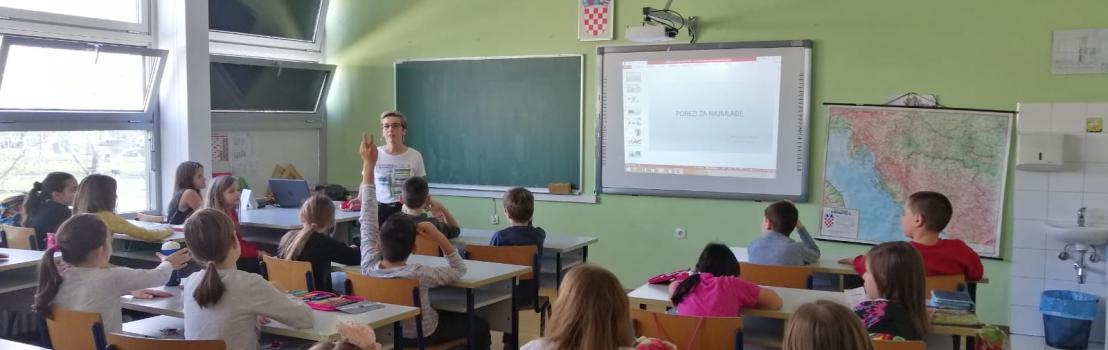
Edukacija djece i mladih u području poreza (TaxEdu)
Prve edukacije djece u području poreza u Republici Hrvatskoj održane su u Zagrebu, u Osnovnoj školi "Borovje". Edukacijama su prisustvovali učenici trećih i sedmih razreda. Službenici Porezne uprave učenicima su približili pojam poreza odnosno zašto su oni važni i čemu služe. Objasnilo im se kako porezi utječu na njih i na koji način oni sudjeluju u plaćanju poreza. Također se raspravljalo o važnosti uzimanja računa i posljedicama kada se porezi ne plaćaju.
The first education of children in the field of taxation in the Republic of Croatia was held in Zagreb, at the "Borovje" Primary School. The educations were attended by third and seventh grade students. Tax Administration officials approve students with the notion of taxes, which is why they are important and what they serve. They were explained how taxes affect them and how they participated in paying taxes. The importance of taking bills and the consequences when taxes were not paid were also discussed.

How taxes keep us healthy
Taxes play an important role in ensuring Europe has effective, accessible and resilient health systems and the resources to invest in disease prevention.
Access to high-quality healthcare systems is a key objective of social protection systems in Europe. To achieve this, EU countries use a range of contribution mechanisms to finance healthcare, one of which is through tax contributions from the public.
Collected taxes go towards a range of health products and services including medical products, appliances and equipment and outpatient services to hospital and public health services and research and development related to health.
According to Eurostat, general government expenditure in the EU on public health services amounted to EUR 1080 billion in 2017. This accounted for 7 % of gross domestic product (GDP). Breaking this figure down further, hospital services accounted for 3.2% of GDP, outpatient services for 2.2 % of GDP and medical products, appliances and equipment for 1 % of GDP. The countries which spent the most on health expenditure were Norway, Denmark, Austria and France. The smallest reported government expenditure on health came from Switzerland, Cyprus, and Latvia.
A spotlight on the novel coronavirus
Tax contributions from the public are also vital for the prevention and treatment of diseases as in the case of the novel coronavirus epidemic.
On the 31 January 2020, the European Commission announced that it is boosting research into the coronavirus with EUR 10 million from its research and innovation programme, Horizon 2020. An emergency request for expressions of interest has been launched for research projects that will advance our understanding of the novel coronavirus epidemic, contribute to more efficient clinical management of patients infected with the virus, as well as public health preparedness and response.
This action has come at a time when the World Health Organization has declared the new coronavirus outbreak a public health emergency of international concern. The coronavirus, a large family of viruses found both in animals and humans continues to spread in China and beyond with cases being reported in Europe.
The funding aims to support two to four research projects, with the Commission using all means to enable research work to start immediately. Stella Kyriakides, Commissioner for Health and Food Safety, issued the following statement: “We need to see a multifaceted, whole-of-government response to the Coronavirus and research is an essential part of this. We need to know more about the virus to better target our prevention measures and to ensure better care for our citizens – this is precisely the aim of the Horizon 2020 emergency research funding announced today.”
The role TAXEDU
The TAXEDU digital platform is spreading awareness among young people about the importance and benefits of tax collection for society which includes investing in a healthier Europe. Teachers can find interactive and exciting resources on the portal’s Training Catalogue which are helping to give real meaning to the role of taxes in young people’s lives.

Ai nastri di partenza la seconda edizione del concorso “Caro sindaco…”
Parte la seconda edizione del concorso “Caro sindaco…”, organizzato dall’Agenzia delle Entrate in Campania e destinato a tutte le scuole della regione.
Gli studenti potranno partecipare con un progetto che valorizzi il proprio territorio (città, quartiere) da sottoporre idealmente al proprio Sindaco o Amministratore locale per cercare di realizzarlo con i fondi pubblici che provengono dalle tasse (pulizia di un giardino pubblico, riparazione di una fontana, sviluppo di un'app per i servizi comunali, eccetera).
L’idea dovrà essere presentata attraverso foto, fumetti, cortometraggi e altre forme espressive.
I progetti vincitori saranno consegnati alle Amministrazioni locali competenti e…chissà che non diventino reali!
Ready to start the second edition of the competition “Dear Mayor…”
Italy’s Revenue Agency in the southern region of Campania launched the second edition of the competition “Dear Mayor…”. It is addressed to all schools in the region.
Students have been asked to propose projects they would send to their mayor or local administrators. The winning projects will be the ones that can add value to their territory (city, district) by using public funds raised from taxes. (Projects might be related to maintaining parks, fixing public fountains or developing an app to be used for municipal services etc.)
The proposal will be presented through photos, comics, short films or other visual means.
The winning projects will be delivered to the local administrations … and, who knows, they may be implemented!
How taxes preserve Europe’s cultural heritage
Taxes play a key role in the preservation and protection of Europe’s rich and diverse cultural heritage.
Cultural heritage comes in many shapes and forms. It can be tangible, such as buildings and artefacts or intangible like oral traditions and practices. It can also be natural or digital. Cultural heritage plays an important role in the history and identity of countries within the EU as well as the continent overall. This makes its preservation not only necessary, but paramount.
Funding programmes safeguarding our cultural heritage
A portion of the revenue collected from taxes in Europe is used to protect and preserve cultural heritage through funding programmes. The Creative Europe programme, for example, is the European Commission’s framework programme which supports culture and audio-visual sectors. From its EUR 1.46 billion budget for the 2014-2020 period, approximately EUR 27 million was reserved for cultural heritage-related projects.
Additionally, the EU has invested over EUR 300 million through Horizon 2020 in research and innovation in cultural heritage. Horizon 2020 aims to leverage the innovation potential of cultural heritage to protect and preserve it as well as enhance socio-economic opportunities. By doing this, cultural heritage is a strategic resource for future generations including the economy.
Between 2007-2013, EUR 3.2 billion was invested in heritage from the European Regional Development Fund. This fund is linked specifically to the protection, promotion and development of cultural heritage among its investment priorities under the objective "Preserving and protecting the environment and promoting resource efficiency". A further EUR 1.2 billion was invested on rural heritage from the European Agricultural Fund for Rural Development. This fund supports the restoration, maintenance, and upgrading of cultural and natural heritage of villages, rural landscapes and high nature value sites.
Another example of a funding programme is the Seventh Framework Programme for Research and Technological Development. Millions of euros from this programme have been invested into projects related to key aspects of tangible, intangible and digital cultural heritage. These projects address a multitude of areas from cultural interactions, museums and identities and linguistic diversity to conservation and restoration, predictive models and early warning devices, and energy efficiency of historic buildings.
In a nutshell, taxes help pay for funding programs which in turn help preserve and protect Europe’s cultural heritage.
The impact of TAXEDU
The TAXEDU digital portal was launched in November 2017 by the European Commission’s Taxation and Customs Union Directorate-General. Since then, the platform has played a critical role in tax education in schools throughout Europe. Not only is it proving to be a key teaching tool for tax-related lessons, but it is also helping to spread awareness among young people about the importance of tax compliance.
Through the platform, teachers are supported by a range of teaching materials including lesson plans, microlearning clips and accompanying storyboards.
Teaching students about tax and the role it plays in society such as the protection and preservation of cultural heritage, has never been more meaningful!
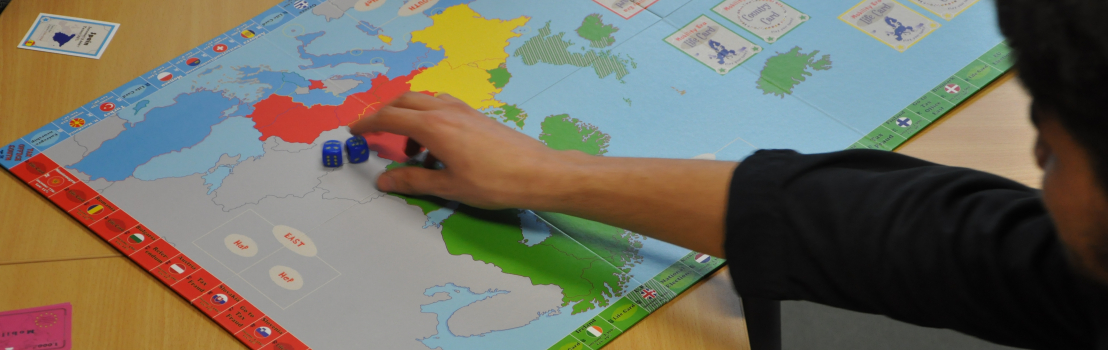
The Italian students play “Mobility era”
"Mobility era" arrives into the Italian schools. Students of a linguistic high school of Rome have played the board game created for the TAXEDU project. The players have faced the different situations of life (looking for a job, starting a new business, marriage, birth of a son, etc.) relating with the tax systems of the European States. Through the game they have verified how taxes affect on our lives. The result? The students have fun and have tested their knowledge of English language, taxation and…geography.

Gli studenti giocano a “Mobility era”
“Mobility era” sbarca nelle scuole italiane. Gli studenti di un liceo linguistico di Roma si sono sfidati al gioco da tavolo realizzato nell’ambito del progetto TAXEDU. I giocatori hanno affrontato le diverse situazioni della vita (ricerca del lavoro, disoccupazione, avvio di una nuova impresa, matrimonio, nascita di un figlio, ect) rapportandosi ai sistemi fiscali dei vari Paesi europei. Hanno potuto verificare attraverso il gioco quanto le tasse influiscano sulla nostra vita. Il risultato? Gli studenti si sono divertiti, mettendo alla prova la propria conoscenza della lingua inglese, del fisco e della …geografia!

Extraterrestre 2QT explains taxes to the students
Italian Revenue Agency’s officials have used Taxedu materials during the lessons with students of a secondary school
Taxedu’s materials arrive into Italian schools. In Pescara (Abruzzo) Revenue Agency’s officials have used the video clips of the web portal Taxedu during a lesson with four classes of students of a secondary school specialized in Administration, Finance and Marketing. During the lesson the officials have used the 2qt Extra-Terrestrial to explain the key principles of the tax issues. The initiative was a big success: students were very interested and involved so our offices have organized other meetings for the future.