

L’extraterrestre 2QT spiega il Fisco agli studenti
I funzionari dell’Agenzia delle Entrate hanno utilizzato il materiale di Taxedu durante le lezioni agli alunni di un istituto superiore
I materiali di Taxedu arrivano nelle scuole italiane. I funzionari dell’Agenzia delle Entrate a Pescara, in Abruzzo, hanno utilizzato le videoclip disponibili sul portale del progetto europeo durante un incontro con 4 classi di studenti di un Istituto tecnico - indirizzo Amministrazione, Finanza e Marketing.
L’extraterrestre 2Qt è stato protagonista della lezione, aiutando i funzionari nella spiegazione dei principi chiave della legalità fiscale. L’iniziativa ha riscosso un grande successo: gli studenti hanno mostrato grande interesse e coinvolgimento e sono previsti ulteriori incontri futuri con l’Agenzia delle Entrate.

A new prize for Europe’s teachers
In recognition of teaching excellence, the Jan Amos Comenius Prize is open to secondary school teachers in Europe.
Think of it as the Oscars for secondary school teachers in Europe. This is one way to describe the new ‘Jan Amos Comenius Prize for high-quality teaching about the European Union’.
The aim of this new prize is to reward teachers and schools that are improving learning about the European Union. The idea behind this prize came from Michaela Šojdrova, an MEP from the Czech Republic, who was inspired by a similar initiative in her country.
Surveys show that young Europeans’ knowledge about the European Union is low and that many of them do not participate in the democratic processes that shape its future. The prize aims to showcase good practices that enhance young people's knowledge and awareness of the EU. Schools play a crucial role in this.
What are the eligibility requirements? The contest is open to secondary schools only. Applications for this reward should showcase interesting and inspirational teaching methods on Europe – the type of methods that give students the opportunity to get a ‘touch and feel of the EU’ – not just about factual information and the role of different institutions.
As such, the type of projects eligible remains flexible. In fact, any initiative that is part of a school’s curricula which teaches about the EU or even a single event is welcomed. The only condition is that this effort should be an extraordinary source of inspiration for other schools that may not be as active in these types of activities. What’s important, however, is for the teacher or school to make learning about the EU truly engaging and attractive to pupils – encouraging them to engage in discussions about Europe.
This is exactly why teachers and schools involved in tax education should consider applying for the award. Drawing on the material and resources available on the TAXEDU digital platform, teachers around Europe are educating the next generation of EU tax payers about the importance of tax and how it is being used to improve the lives of Europeans in an exciting, inspirational and fun way.
There will be up to 28 prizes of 8.000 EUR each, one in each Member State.
How to apply
The contest is open to all secondary schools of general, vocational, technical or any other type of education as long as they are officially recognized by the national education authorities in an EU Member State.
The application should include evidence of an activity demonstrating how applicants meet the criteria. In addition to a written description, the applicants should also submit a video about the activities. So, if pupils participate in the shooting of the view, this is proof that they were engaged, and the activity worked.
The deadline for applications is 6 February 2020. The European Commission makes the final selection after the applications are assessed by independent external evaluators appointed by the European Commission.
More information on the prize can be found on the Commission’s website.
A new European tax boardgame hits the market
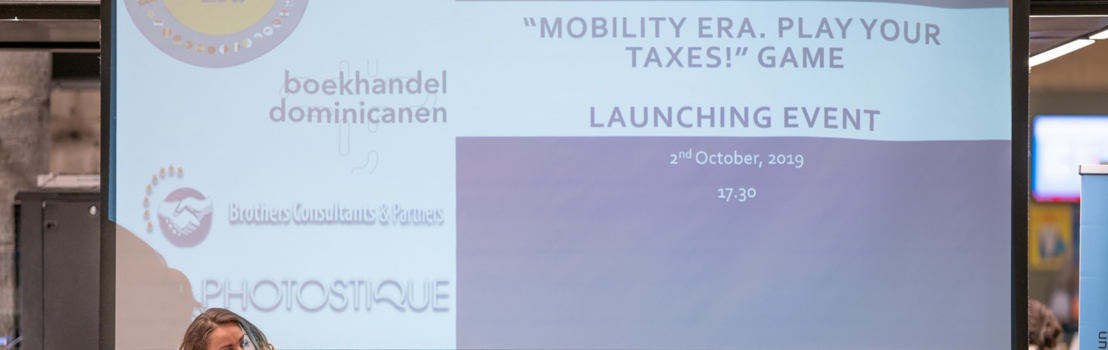
Why should we pay taxes? Why are taxes higher in some countries than in others? Find the answers to these questions and more in the new European tax game, “Mobility Era. Play your taxes!”.
This colourful boardgame was launched in Maastricht on 2 October in one of the most beautiful bookstores in the Netherlands. This cooperation marks one of the many fruitful steps towards educating new generations of European taxpayers in a fun and engaging way.
The launch event commenced with a free game giveaway whereby audience members played the boardgame in an attempt to accumulate the highest amount of Happy Points. Those with the most Happy Points won a free game.
By playing the game, audience members discovered its effectiveness as an interactive teaching resource – one that, using real statistics on income and taxes, enriches players’ knowledge of the European Union, Member States and candidates. The game helped to further enhance players’ understanding of tax mechanisms (how taxes are collected and spent).
After the competition, a group of 40 people gathered to participate in a successful debate about why taxes are good and bad for individuals and businesses. The audience was split into two sides: For & Against taxes. The session was moderated by Researchista – a start-up in research communication.
The ceremony was inaugurated with the cutting of the Xmas Game Tree ribbon in which Professor Hildegard Schneider (Maastricht University), the promoter of the PhD thesis from which the game was inspired, took part.
Through this game, Dr Irina Burlacu (Researchista) hopes to inspire more researchers to communicate the results of their research with the general public. The game was elaborated in cooperation with TAXUD and inspired by the EU TAXEDU portal on tax education for kids, teenagers, young adults and teachers.
Since its launch, the first special edition of games linked to TAXEDU portal have been distributed to representatives of each Member State through the TAXEDU Network as an additional resource to help promote tax education at the national level. The aim is to increase tax consciousness among today’s and future European taxpayers in a joyful manner. TAXEDU promotors can further use the boardgame to support national tax education communication activities geared towards children, students, teachers and all citizens.
Follow the game on Instagram and Facebook!

How tax money benefits the disabled
Tax is a powerful tool that provides revenue which funds basic public services for disabled.
More than 120 million people in the European Union have some form of disability. EU Member States are committed to improving the lives of those with disabilities and have spent billions of euros on social protection expenditure for disability benefits, which taxes help fund.
How Member States help
All EU Member States provide financial and other provisions, in the form of benefits, to those with a disability. The EU Member States spent over 280 billion EUR of social protection expenditure on disability benefits in 2014, according to data published by Eurostat. This represented 7.3 % of the total spent on social benefits, a rate almost equivalent to that spent on survivor's benefits (5.7 %) and family benefits (8.6 %).
Eurostat also noted that the share of total social benefits spent on disability benefits varied significantly between EU Member States. It accounted for more than 10 % of total social benefits in Denmark (12.9 %), Croatia (12.2 %), Sweden (12.0 %), Estonia (11.8 %), Luxembourg (11.4 %) and Finland (10.9 %), but for less than 4 % in Cyprus (3.2 %) and Malta (3.7 %), followed by Italy (5.9 %), Ireland and the United Kingdom (both 6.0 %).
In Italy, for example, there are close to three million disabled people who are unable to perform necessary day-to-day tasks independently. Only those aged between 18 and 65 are entitled to disability payments each month. In Sweden, the disability benefits are an important part of the country’s social security system, providing financial protection to approximately 1.5 million people with a disability making it the largest expenditure for this agency.
In Germany, there are approximately 7.6 million people who live with severe disabilities. Meeting certain conditions, they are eligible for disability benefits. In 2016, the German Parliament passed a comprehensive reform legislation to expand the rights of disabled people. This has helped make the application process for disability benefits simpler. In France, disability affects approximately 12 million people. Under the French government’s comprehensive inter-ministerial policy, disabled allowances increased per month to try and improve the lives of these individuals.
Teaching the importance of tax
So, can taxes help support persons with disabilities? Yes, they can!
Teaching younger learners about tax may seem like a heavy and unexciting activity for the classroom. However, the TAXEDU digital portal is making tax education both easy and fun. Taking real-world examples about how tax benefits public services, teachers and students can dig deep into TAXEDU’s interactive and fun materials.
These are available at the site’s teaching catalogue that will ensure tax lessons come to life. More importantly, learners develop an understanding of how the real world works, and how people such as those living with a disability can also live a better life thanks to the taxes we pay.
Taxes lift barriers for disabled
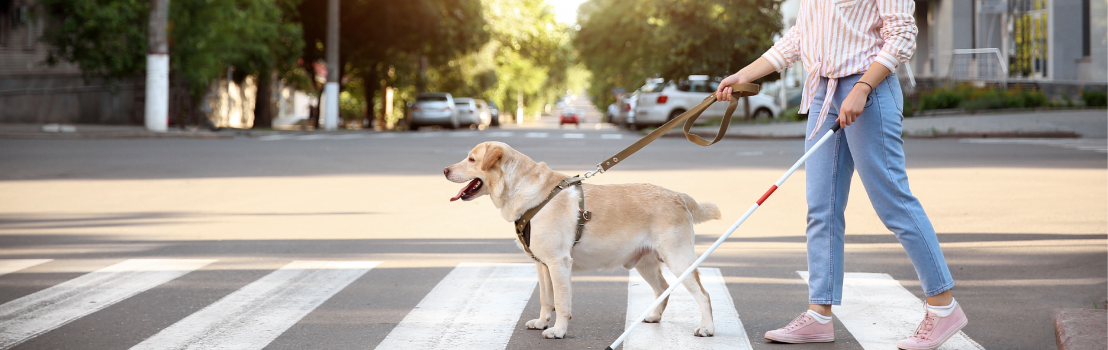
European cities are allocating a portion of tax payers’ money to ensure people with disabilities are able to contribute to society on an equal basis with others.
To promote equality of opportunity and accessibility for people with disabilities, Member States are working towards a barrier-free Europe.
The EU’s Charter of Fundamental Rights prohibits discrimination on the ground of disability and recognises the right of people with disabilities to benefit from measures to ensure their independence, social and occupational integration and participation in the life of the community.
All the EU Member States have adopted measures to ensure disabled people are not excluded from using basic products and services which are often taken for granted by those living without any limitations. This includes the ability to enter a building such as a school and using public transport to withdrawing money from an ATM.
The European Accessibility Act sets common minimum accessibility requirements for certain products and services to help disabled persons participate in society.
Cities leading the way
Stockholm, in Sweden, is a prime example of a city significantly improving accessibility for disabled persons. Hundreds of bus stops for instance, have been modified to facilitate boarding. The city also converted thousands of pedestrian crossings to include a ticking sound when traffic lights turn green, contrast markings and ramps to allow wheelchairs easy access to walkways.
In the Netherlands, the city of Breda, the winner of the 2019 Access City Award, implemented a four-year plan from 2018-2021, to make accessibility the norm in the city. Hundreds of shops and bars have been checked for accessibility and the city has also worked towards ensuring their websites are accessible to all. As for transport, everyone is able to access bus stops and the new railway station.
Another example of a city implementing initiatives to ensure accessibility for people with disabilities, is the city of Gdynia in Poland. In 2013, city officials adopted accessibility standards which entail guideless for designing public spaces to meet the needs of persons with disabilities.
The city also created new development paths for children and adults with intellectual disabilities such as theatre workshops.
How taxes enable the rights of disabled
Taxes pay for many public services that support people with disabilities. Taxes help pay for public hospitals, schools and public transportation –to make and maintain them accessible to all Europeans.
The TAXEDU digital portal is helping to increase awareness of the importance of paying taxes. Students can learn more about the productive power of taxes by watching the portal’s micro-clips, “Do I benefit from taxes?” and “What is income and how is it taxed?” Teachers and students can also find out more about taxes on the on the portal’s Training Catalogue and News and Events page.
Through the TAXEDU portal, students all over Europe are learning about the positive real-world impact paying taxes can have – especially for people living with disabilities.

International Day of People with Disabilities
Taxes help improve the lives of millions of Europeans with disabilities.
They support the public services and infrastructure needed to ensure people with disabilities are able to take part and contribute to society on an equal basis with others. The aim of this thematic pack is to raise awareness about these issues and how the TAXEDU digital portal can contribute with tax lessons on this topic.
Read more:
Taxes can stop global warming
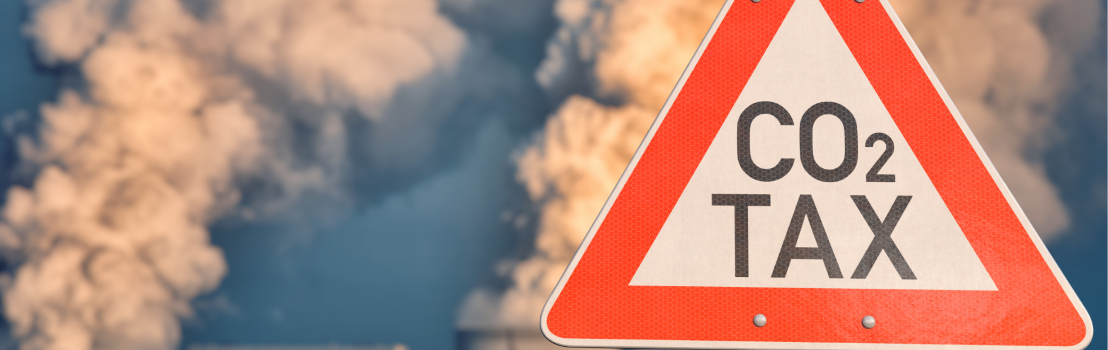
Earth needs our help to combat climate change. Environmental taxes can help finance measures to reduce environmental damage.
Climate change is one of the most important issues of our time. It refers to a change in the pattern of weather over a period of time. One of the causes of this change is global warming which is the gradual heating of the Earth’s surface, oceans and atmosphere. Global warming is mainly a result of human activities such as the burning of fossil fuels, like coal and oil, that pump carbon dioxide and other greenhouse gases into the atmosphere.
Carbon tax to meet climate change challenge
The EU has made it its priority to tackle climate change and minimise its effects. It has led the world towards renewable energy sources and set up the world’s first and largest Emissions Trading System which placed an overall limit on all CO2 emissions from power stations, energy-intensive industries and civil aviation.
EU leaders are committed to transforming Europe into a highly energy-efficient low carbon economy. In addition, the EU has set itself the long-term goal to reduce greenhouse gas emissions by up to 85 % by 2050. The EU Commission President Ursula von der Leyen has also put climate change high on the agenda and wants Europe to become the world’s first climate-neutral continent.
To achieve these and other ambitious targets, EU leaders are closely examining energy tax, which falls under the umbrella of environmental taxes.
Many proposals have surfaced regarding how environmental tax can be best used and adapted in the future to solve the issue of climate change. Some considerations include implementing higher minimum tax rates on energy, fossil fuel levies and ending waivers for the air and sea transport sectors. There are also discussions about introducing a type of tariff on carbon dioxide and taxing imports from third countries that have a poor sustainability rating.
Educating the next generation of taxpayers
The TAXEDU digital platform is helping to spread the message of how important taxes, like energy tax, is for the environment and society. Through this platform, students can find out more about taxes by visiting the Training Catalogue which has stimulating and interactive resources.
TAXEDU is helping to build the next generation of taxpayers who understand the impact tax can have in solving environmental issues like climate change.

The case for taxing plastic
With the help of the TAXEDU platform, students and teachers from all around Europe are learning about the role environmental taxes can play in overcoming a range of environmental problems. One such issue is plastic waste.
Plastic is everywhere and we can’t seem to live without it. The demand for plastic products is on the rise in Europe, according to the European Environment Agency Report (No 2/2019).
Europe’s total demand for plastic reached 52 million tonnes in 2017. This is 15 % of global demand. Single-use plastic bags, which have a very serious impact on the environment, are among the most common littered items destroying our ecosystem.
Plastic bags are primarily made from fossil fuel. As such, they can remain in the environment for hundreds of years. They are a major source of pollution both on land and in our oceans and can be fatal to our wildlife.
There have been many reported cases of animals being entangled in plastic bags or mistaking them for food. A lot of energy is also used to produce plastic bags.
Plastic bag taxes around Europe
Understanding the importance of plastic bag reduction, many countries across Europe have implemented regulations in the form of environmental taxes also known as green taxes to protect the environment.
In Denmark, for example, the introduction of green taxes on packing and plastic bags saw plastic consumption reduce from approximately 800 million bags to 400 million.
In Greece, the introduction of a mandatory environmental fee per lightweight plastic bag has resulted in a reduction of up to 80 % in large stores and 60 % in other stores.
In Portugal, a government tax on plastic bags in 2015, as part of their green taxation reform, led to a reduction in plastic bags at stores and supermarkets by 90 %.
Since 2011 in Bulgaria, a tax on plastic bags was imposed on producers and importers. This was subsequently passed on to retailers and consumers, resulting in a decline in bag consumption by more than half in the first month of the tax.
These are just some examples of how countries in Europe have tackled the issue of plastic bags.
TAXEDU goes green
The TAXEDU digital platform is packed with information and resources for students to learn more about environmental taxes and how they protect the environment.
Students can watch the microlearning clip “Can taxes help protect the environment?” It explains environmental taxes and how these protect the environment.
Teachers can find fresh ideas on how to incorporate this clip into their lesson at the Teachers’ Corner. This has a range of multilingual teaching material including detailed lesson plans, story boards, microlearning and e-learning resources which aim to enrich tax-related lessons.
Thanks to the TAXEDU portal, learning and teaching tax-related topics, such as environmental taxes, is easier and more enjoyable!
Financial education month: students go to economics lesson
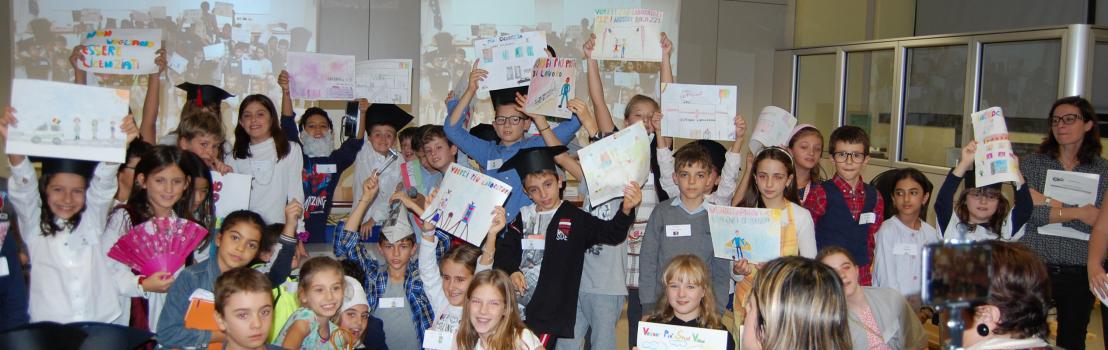
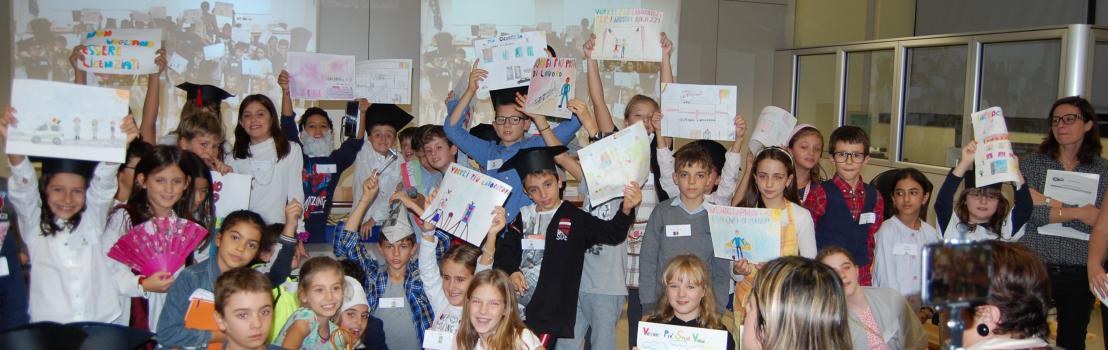
In October Italian Revenue Agency has participated at the 2019 edition of the “Financial education month”, an initiative promoted by the Ministry of Economic and Finance, Ministry of the Education and Ministry of Economic Development, together with other associations of the economic sector.
The participants have promoted meetings and events with the students in all Italian territory to talk about economics issues through a simple language.
Revenue Agency’s offices have participated with the coordination of the Communication and Press Office.
Our officers have explained to students the importance of paying taxes and of the everyone contribution for the correct functioning of the society and the public services. In Naples, for example, our office have organized a meeting with universitarian students. In Bologna our officers have organized a role play for children and a treasure hunt for students of secondary school.
Mese dell’educazione finanziaria: gli studenti a lezione di economia
L’Agenzia delle Entrate ha partecipato all’edizione 2019 del mese dell’Educazione finanziaria, iniziativa promossa dai ministeri dell’Economia e delle Finanze, dell’Istruzione, dell’Università e della Ricerca e da quello dello Sviluppo economico insieme ad altri enti e associazioni che operano nel settore economico.
L’iniziativa si è svolta nel mese di ottobre e ha visto l’organizzazione di incontri nelle scuole in tutta Italia con l’obiettivo di parlare ai più giovani di materie economiche con un linguaggio semplice e accessibile a tutti.
Con il coordinamento dell’Ufficio Comunicazione e stampa, le Direzioni regionali dell’Agenzia delle Entrate hanno promosso incontri su tutto il territorio nazionale. In particolare, sono state coinvolte l’Abruzzo, la Campania, l’Emilia Romagna, il Piemonte e la Sicilia.
I nostri funzionari hanno spiegato agli studenti l’importanza di pagare le tasse e del contributo di ogni cittadino per il corretto funzionamento della società e dei servizi pubblici. A Napoli, ad esempio, l’incontro è stato organizzato per gli studenti universitari. A Bologna, invece, i bambini si sono cimentati con un gioco di ruolo, mentre gli studenti delle scuole superiori con una caccia al tesoro.