
Knowing better our rights as taxpayers

Editorial Team


We all pay taxes. But when it comes to our rights as taxpayers, there is a lot we don’t know. Information is on its way, thanks to the European Commission.

Raising awareness amongst taxpayers about their rights and obligations is a big job. But it’s one that will improve tax compliance. This is why the European Commission is preparing a new set of measures. Wondering what these are?

Here’s a sneak preview of what’s in the pipeline.

A communication related to taxpayers’ rights

According to the European Commission, various economic activities between different countries can suffer from this situation of lack of awareness. This is something which impacts the good functioning of the EU single market.

What if taxpayers had better knowledge of the rules and their rights in taxation? The Commission believes strongly that increasing awareness of taxpayers’ rights could help improve the relationship between taxpayers and tax administrations.

In this scope, the Commission plans to publish a Communication related to taxpayers’ rights, to support simplicity and fairness in taxation.

A recommendation to improve the situation of taxpayers in the single market

How is it possible to facilitate the implementation of taxpayersrights and simplify tax obligations? The Commission will publish a recommendation for the attention of Member States.

This recommendation will include an analysis of the issues related to the rights under EU law.

It will also identify and promote good administrative practices.

Ultimately, the recommendation will reflect how to simplify taxpayers’ obligations, thanks to new technologies, for example.

Package for fair and simple taxation

This initiative is part of the package for fair and simple taxation that the Commission published in 2020 to ensure that EU tax policy supports fair and efficient taxation between now and 2024.

Built on two pillars, fairness and simplicity, the package is a multifaceted approach to make taxation fairer, greener and fit for the modern economy. TAXEDU’s news item describes the measures of this package.

Stay informed

Want to know more about tax education around Europe? The TAXEDU news section gives you a glimpse of the latest activities being led in various EU Member States, as well as informative articles on the related EU legislation.

If you’re looking for interactive activities around tax, we strongly recommend you take the quiz Are you familiar enough with taxes? with your children or pupils. Don’t hesitate to share your results and impressions in the forum, with the TAXEDU community. Learning about taxation can be fun. Find out how by browsing our training catalogue!

More information

EU taxpayers’ rights in the single market (Communication)

Roadmap ‒ Recommendation to Improve the Situation of Taxpayers in the Single Market

Package for fair and simple taxation

An economy that works for people

Why greening taxes makes sense

Editorial Team


Does taxation have a colour? If we’re referring to the ones that can help create a more sustainable future, then the answer is yes! The colour is green.

Environmental (or green) taxes include taxes on energy, transport, pollution and resources. These are part of a broader policy mix of green taxation initiatives at the EU and Member State level that can help us reach environmental policy goals.

Since the transition towards climate neutrality requires deep changes, green taxation addresses every aspect of environmental protection and preservation. For instance, it covers climate change, pollution, resource consumption and biodiversity loss, as well as gas emissions and the use of pernicious substances.

Currently, EU Member States implement environmental taxation strategies. However, there are differences across the Member States due to the absence of common EU rules.

Doing things differently

No matter the strategy implemented, the goal is one: to mitigate damage to the environment.

In terms of pollution, which represents a significant cost for our society and is a key concern for EU citizens, there’s the Polluter Pays Principle. Polluters are held responsible for the pollution they cause. The idea behind this policy is for polluters to find environmentally friendly alternatives or to fund clean-up actions. Examples of taxes are listed below.

Air pollution: Nitrogen Oxide (NOx) tax, tax on domestic biomass burning, and tradeable livestock rights for NH3 emissions.

Water pollution: Pesticides tax, nitrogen fertiliser levy, and waste water charge.

Waste: Landfill and incineration tax, pay as you throw, and beverage container tax.

Biodiversity: Market-based offsetting, forest felling charge, intensive livestock charge, and peat tax.

Green taxation also encourages environmentally beneficial activities. The purchase and use of eco-friendly cars, the use of public transport, the use of biofuels and renewable energy, the investment and research in energy efficiency and clean technologies are several activities that are being incentivised through environmental taxation.

Green taxes for a green future

Environmental taxes aim to facilitate the EU’s goal of green transition based on the European Green Deal. The Deal is a comprehensive strategy for the Union to become the first climate neutral continent by 2050 and transform it into a sustainable, fairer and more prosperous society that respects planetary boundaries.  

Carbon taxes, for example, will set the price of carbon that will ultimately result in discouraging the consumption of carbon-intensive products and fuels.

The ‘Fit for 55’ package, the EU’s plan against greenhouse gas emissions, puts the focus on reducing reliance on fossil fuels including coal, oil and natural gas, as well as expanding the use of solar, wind and hydropower energy, accelerating the development of electric cars, and spurring clean-energy options for aviation and shipping.


Environmental tax revenue

Based on the latest data available, total environmental tax revenue in the EU in 2020 amounted to EUR 299.9 billion, representing 2.2 % of EU GDP and 5.4 % of total EU government revenue from taxes and social contributions. The latest data also shows that a very large portion of the 2020 EU environmental tax revenue – 77.2 % - comes from energy taxes. Transport taxes account for 19.1 %, and the share of taxes on pollution and resources is still very small (3.7 %) in the EU.

Across the EU, the environmental tax revenue-to-GDP ratios ranged in 2020 from 1.2 % (Ireland) to 4.7 % (Slovenia). The environmental taxes to taxes and social contributions (TSC) ratios also varied across the EU Member States, with Slovenia (12.3 %) reporting the largest shares of environmental taxes in TSC, and Slovakia (4.0 %) and Luxembourg (3.5 %) the lowest.

As regards the tax burden, this varies by environmental tax category and sector. Corporations pay the highest share of energy taxes (51.5 % in 2019) while the share levied on households is at a slightly lower level (44.0 %).

Households are, however, the main payer of transport taxes (66.4 % in 2019), and they pay a larger portion of pollution and resource taxes (55.9 % in 2019).

The fact that the environmental taxation is aiming to reach climate and environmental policy goals and to influence citizens’ behaviour makes it a powerful tool to transform our economy.

For more information

https://ec.europa.eu/info/sites/default/files/b1-greening_taxes.pdf

https://www.europarl.europa.eu/RegData/docs_autres_institutions/commission_europeenne/swd/2022/0226/COM_SWD(2022)0226_EN.pdf

https://op.europa.eu/en/publication-detail/-/publication/f85da28f-f5be-11ec-b976-01aa75ed71a1


What young adults need to know about taxes

Editorial Team


From university fees, first jobs and double taxation rules, read here about what young adults should expect regarding taxation.

Maria recently completed high school and is about to begin a course in mathematics at the University of Siena, in Italy. Charles just learned that he has got a job as a web developer in a prestigious company in Bucharest, Romania. And Sarah eventually finished her business plan, allowing her to launch her own company dedicated to products based on organic lemons in Nice, France.

What can they expect regarding taxation? They are strongly encouraged to follow the TAXEDU guide!

Income tax, property tax, inheritance tax…it can be challenging for young people to grasp this terminology. The TAXEDU section dedicated to young adults offers a sneak preview of the main taxes, such as consumption tax, tariffs/customs duties, excises, environmental tax, capital gains, etc. A short definition accompanies each term.


Tax and studies

Young Europeans beginning university must pay student fees. However, the amount depends on whether the university is funded through taxpayers’ money in that country. University fees vary greatly. In some EU countries admission to higher education is free, while it can be expensive in others.

At the University of Siena, Maria knows that she will pay taxes and has begun to search for information on the university’s website. She intends to ask for scholarships, grants or a loan to enable her to carry on her studies.

Are you about to begin university like Maria? You can search for relevant information on each EU country.


Beginning a first job as an employee

As a future employee, Charles is aware that his income will be taxed. In Romania, the personal income tax (PIT) rate is 10 %. Naturally, this rate varies from one EU country to another.

However, Charles still hesitates whether he should take the new job in Bucharest or spend some time abroad to gain more experience. Why not in Germany? If he spends more than six months there he will be considered as a tax resident and will have to pay taxes in Germany.

Are you in the same situation? You can find information on how income tax works abroad and how to avoid double taxation.


Being his or her own boss

Plenty of promising young people like Sarah have business and innovation in their DNA. For a couple of years, she knew that organic lemons and their products are the specialty of Menton, a city close to the Italian border in France, whereas it was difficult to find them in Nice.

With a great idea and a business plan, Sarah is now ready to begin her adventure. Do you feel that you could be a young entrepreneur too? You can find a treasure trove of information on how to start your business in the EU. However, you should know that VAT rules can be applied differently in each EU country. You can learn more about the rules in the country where your company operates.


Young adults and TAXEDU

Thanks to TAXEDU, Maria, Charles and Sarah can check out a range of e-learning modules in the training catalogue, which includes topics like ‘How to start a business or ‘When taxes appear in youngsters’ life! to develop their knowledge about taxation and ensure they are heading in the right direction.

To discuss with peers or tax specialists, why not kick off a discussion in the forum and meet up with the lively TAXEDU community!


ESPAÑA - La Delegación Especial de la Agencia Tributaria en Valencia imparte Educación Cívico-Tributaria en la Escuela de Negocios-ESIC

La Agencia Tributaria, en el marco de la colaboración con las Universidades españolas, imparte habitualmente charlas con el objetivo de trasmitir a los alumnos los valores de responsabilidad fiscal e informarles sobre las posibilidades de Empleo Público en la AEAT.

Dentro de esta colaboración, el pasado 3 de mayo la Delegación Especial de Valencia impartió una charla del Programa de Educación Cívico Tributaria de la Agencia Tributaria a los alumnos de 1º de International Business de la Escuela de Negocios ESIC- Campus Valencia, con muy buena acogida por parte tanto de alumnos como de profesores.

La Constitución Española proclama en su artículo 1.1 que “España se constituye en un Estado social y democrático de Derecho”. En esta concepción del estado social, que cuida de sus ciudadanos, se invitó a los alumnos a reflexionar sobre el carácter esencial de la contribución al gasto público.

Profundizando en esta idea, se les explicó a los alumnos el contenido del artículo 31 de la Constitución Española, que establece que "El gasto público realizará una asignación equitativa de los recursos públicos...”. Este principio de equidad y de justicia del gasto público supone la garantía de una satisfacción de las necesidades públicas que los servicios públicos del Estado ha de prever como garantía del Estado de Bienestar.

Por otro lado, el mismo artículo 31 de la Constitución Española recoge el principio de generalidad, por el cual "Todos contribuirán al sostenimiento de los gastos públicos de acuerdo con su capacidad económica mediante un sistema tributario justo inspirado en los principios de igualdad y progresividad que, en ningún caso, tendrá alcance confiscatorio".

Los alumnos aprenden cómo ellos mismos contribuyen, de acuerdo con su capacidad económica y a través del pago de los distintos impuestos, a la obtención de ingresos públicos, y qué tipo de sociedad existiría en caso de no pagar impuestos, con el fin de mejorar la concienciación fiscal para impulsar el cumplimiento voluntario de las obligaciones tributarias.

Durante la sesión se explicaron cuáles son las funciones de la Agencia Tributaria para cumplir su misión de aplicación del sistema tributario estatal y aduanero, la lucha contra el fraude y la asistencia al contribuyente, así como los Códigos de Buenas Prácticas Tributarias (cumplimiento cooperativo).

Se les mostró el Portal TAXEDU en el marco de la Unión Europea, donde se accedió a contenidos que resultaron interesantes y amenos, tanto para los alumnos como para el profesorado, siguiendo las innovaciones de aprendizaje mediante gamificación recomendadas por la OCDE en materia de educación cívico-tributaria.  

Los alumnos mostraron también especial interés en las operaciones virtuales y en el comercio internacional, así como en las posibilidades de empleo público para trabajar en la Agencia Tributaria.

La sesión fue muy participativa y con gran interacción por parte de los alumnos.


Language
Español

SPAIN - The Regional Office in Valencia of the Spanish Tax Agency provides Civic-Tax Education at the ESIC Business School

Marta Peris Duo

The Spanish Tax Agency, within the framework of its collaboration with Spanish Universities, regularly gives lectures with the aim of transmitting to students the values of fiscal responsibility and informing them about the possibilities of Public Employment in the STA.

As part of this collaboration, on 3rd May, the Regional Office of Valencia gave a talk on the Spanish Tax Agency's Civic Tax Education Program to the students in the 1st year of International Business at the ESIC Business School -Campus Valencia, which was very well received by both students and professors.

Article 1.1 of the Spanish Constitution proclaims that "Spain is constituted as a social and democratic State governed by the rule of law". In this conception of the social state, which takes care of its citizens, the students were invited to reflect on the essential nature of the contribution to public spending.

To further explore this idea, the students were explained the content of Article 31 of the Spanish Constitution, which establishes that "Public spending shall be based on an equitable allocation of public resources...". This principle of equity and justice in public spending implies the guarantee of the satisfaction of public needs, which the public services of the State must provide for as a guarantee of the Welfare State.

On the other hand, the same Article 31 of the Spanish Constitution includes the principle of generality, whereby "Everyone shall contribute to the support of public expenditure in accordance with their economic capacity through a fair tax system inspired by the principles of equality and progressiveness which in no case will have confiscatory scope".

Students learn how they themselves contribute, according to their economic capacity and through the payment of different taxes, to obtaining public revenues, and what kind of society would exist if they did not pay taxes, in order to improve tax awareness to encourage voluntary compliance with tax obligations.

During the session, the functions of the Spanish Tax Agency were explained in order to fulfill its mission of applying the state tax and customs system, fighting fraud and assisting taxpayers, as well as the Codes of Good Tax Practices (cooperative compliance).

They were shown the TAXEDU Portal within the framework of the European Union, where they had access to contents that were interesting and enjoyable for both students and teachers, following the learning innovations through gamification recommended by the OECD in the field of civic-tax education.  

The students also showed special interest in virtual operations and international trade, as well as in public employment opportunities to work at the Spanish Tax Agency.

The session was very participative and with great interaction from the students.

In Toscana l’Agenzia delle Entrate italiana spiega agli studenti i propri servizi digitali


La Direzione Regionale della Toscana dell’Agenzia delle Entrate continua a diffondere presso le nuove generazioni il valore della legalità fiscale con “AgEvolution” un’iniziativa realizzata in collaborazione con Agenzia delle entrate – Riscossione, che ha permesso agli studenti e alle studentesse di conoscere più da vicino l’Amministrazione finanziaria e la digitalizzazione dei servizi all’utenza.

Durante gli incontri i funzionari e le funzionarie delle due Agenzie hanno illustrato vari argomenti (legalità fiscale, principi costituzionali, “centralità” del cittadino e importanza del pagamento delle imposte) alle classi quarte e quinte degli istituti superiori, anche tramite la navigazione sui rispettivi siti istituzionali.

L’intento è stato quello di sviluppare nei giovani, quali futuri contribuenti di domani, le loro competenze digitali e una maggiore consapevolezza rispetto alle attività e ai servizi offerti dalle due Agenzie.

Le nuove competenze acquisite dagli studenti e dalle studentesse potranno servire anche a orientare i loro familiari nell’accesso ai principali servizi fiscali online a loro disposizione.

L’iniziativa è presente ne “Le Chiavi della Città”, un progetto del Comune di Firenze rivolto alle scuole.

Language
Italiano

In Tuscany the Italian Revenue Agency explains to the students the digital services

Editorial Team


The Tuscany regional Directorate of the Italian Revenue Agency continues to spread to the young people the value of the tax education through “AgeVolution”, an initiative promoted in collaboration with the Revenue Collection Agency.

This project has permitted to young students to know the Tax Agencies’ activities e the new fiscal digital services. During the meetings the tax officials have illustrated many issues (i.e., tax legality, the principles of the Italian Constitution, the main Italian law, the importance of paying taxes).

The aim was to develop the students’ digital skills and the major knowledge of the Agencies’ activities and services. The new skills acquired by the students can be helpful also for their families in the access and in the use of the Agencies’ digital services. 

The initiative is included into the project “The keys of the city” promoted by the city of Florence.

UNA GRAN HERRAMIENTA PARA LA EDUCACIÓN FISCAL EN LA UNIÓN EUROPEA - ARAGÓN, ESPAÑA

TAXEDU es un portal de la Unión Europea accesible para todos, muy sencillo de manejar, dinámico y entretenido, que resulta de gran utilidad para la educación fiscal, por lo que se pretende llegue al mundo educativo desde edades tempranas. Ha contado y cuenta con la participación de las administraciones tributarias nacionales, bajo la dirección del Parlamento Europeo y de la Comisión. Su objetivo es facilitar en todos los países de la Unión Europea la formación en materia tributaria, explicar cómo afectan los tributos a nuestras vidas, qué beneficios aportan a todos los ciudadanos y conseguir que se interiorice la responsabilidad en el cumplimiento voluntario de los deberes tributarios como una cuestión de ciudadanía, en definitiva, conseguir reducir la evasión fiscal y el fraude en Europa.  

TAXEDU tiene la virtud de facilitar de la forma más fácil y entretenida la educación fiscal, considerada ésta, no solo por los educadores y las administraciones tributarias, como necesaria, sino que viene siendo demandada desde hace ya algunos años por una mayoría de ciudadanos, como es el caso de España.

Este portal se dirige a tres grupos de edad: niños (9 a 12 años), adolescentes (13 a 17 años) y jóvenes adultos. Estos últimos pueden encontrar información relevante sobre el papel de los impuestos en la educación universitaria, el mercado de trabajo y el de los negocios.

TAXEDU incluye conceptos varios sobre la educación tributaria, como se ha dicho, en función de la edad o la etapa escolar que se trate, entre los que se encuentran los ingresos y gastos públicos, imprescindibles conocerlos para entender la razón de ser de la fiscalidad. Los contenidos educativos de TAXEDU, con numerosos datos e información, se presentan para estos colectivos de manera entretenida y dinámica, disponiendo, además de textos, juegos y videos. También existe un apartado “El rincón del profesor” con recursos, consejos y estrategias para consultar y aprovechar de cara a la consecución de los objetivos ya señalados. Su contenido resulta de utilidad para diferentes asignaturas. De interés también para los profesores, profesionales del mundo de la educación, pueden encontrar ideas para su trabajo, materiales diversos, enlaces a información relevante, vídeos y modelos para presentaciones y actividades.

Todos sabemos lo importante que es esta herramienta educativa, por ello, en España, los formadores de la AEAT suelen presentarla en las charlas del PECT, con invitación a profesores y alumnos de los centros escolares a manejarla más tranquilamente en casa y en las aulas. Es decir, la tarea de difusión, tan importante para ser conocido TAXEDU, se hace siempre y en todo caso, citando la ruta de acceso, aunque debido al escaso tiempo disponible para las charlas y el gran número de datos que contienen las diapositivas de cada una de las presentaciones, que varían según la edad, no se puede recorrer todo el portal, que merecería un tiempo de la misma duración que las propias charlas. No obstante, los profesores de los escolares, informados de la existencia del portal, y agradecidos, nos comunican su interés y disposición de utilizar todos sus recursos para trabajar la educación fiscal en las aulas. Excelente forma de sacar partido a un portal tan necesario e interesante.

Language
Español

A GREAT TOOL FOR TAX EDUCATION IN THE EUROPEAN UNION - ARAGON, SPAIN

Concha Roldán Muñío


TAXEDU is a portal of the European Union accessible to all, very simple to handle, dynamic and entertaining, which is very useful for tax education, so it is intended to reach the educational world from an early age. It has had and has the participation of the national tax administrations, under the direction of the European Parliament and the Commission. Its objective is to facilitate training in tax matters in all countries of the European Union, explain how taxes affect our lives, what benefits they bring to all citizens and ensure that responsibility is internalized in the voluntary fulfillment of tax duties as a matter of citizenship, in short, to reduce tax evasion and fraud in Europe. 

TAXEDU has the virtue of facilitating tax education in the easiest and most entertaining way, considered not only by educators and tax administrations, as necessary, but has been demanded for some years by a majority of citizens, as is the case of Spain.

This portal is aimed at three age groups: children (9 to 12 years old), teenagers (13 to 17 years old) and young adults. The latter can find relevant information on the role of taxes in university education, the labor market and that of business.

TAXEDU includes various concepts on tax education, as has been said, depending on the age or school stage in question, among which are public revenues and expenses, essential to know them to understand the raison d'être of taxation. The educational contents of TAXEDU, with numerous data and information, are presented to these groups in an entertaining and dynamic way, also having texts, games and videos. There is also a section "The teacher's corner" with resources, tips and strategies to consult and take advantage of in order to achieve the objectives already indicated. Its content is useful for different subjects. Of interest also to teachers, professionals from the world of education, can find ideas for their work, various materials, links to relevant information, videos and models for presentations and activities.

We all know how important this educational tool is, therefore, in Spain, the trainers of the AEAT usually present it in the pect talks, with an invitation to teachers and students of the schools to handle it more quietly at home and in the classrooms. That is, the task of dissemination, so important to be known TAXEDU, is always done and in any case, citing the access route, although due to the limited time available for the talks and the large number of data contained in the slides of each of the presentations, which vary according to age, you can not go through the entire portal,  that would deserve a time of the same duration as the talks themselves. However, the teachers of the schoolchildren, informed of the existence of the portal, and grateful, communicate their interest and willingness to use all their resources to work on fiscal education in the classrooms.  Excellent way to take advantage of such a necessary and interesting portal.

TAXEDU is a portal of the European Union accessible to all, very simple to handle, dynamic and entertaining, which is very useful for tax education, so it is intended to reach the educational world from an early age. It has had and has the participation of the national tax administrations, under the direction of the European Parliament and the Commission. Its objective is to facilitate training in tax matters in all countries of the European Union, explain how taxes affect our lives, what benefits they bring to all citizens and ensure that responsibility is internalized in the voluntary fulfillment of tax duties as a matter of citizenship, in short, to reduce tax evasion and fraud in Europe. 

TAXEDU has the virtue of facilitating tax education in the easiest and most entertaining way, considered not only by educators and tax administrations, as necessary, but has been demanded for some years by a majority of citizens, as is the case of Spain.

This portal is aimed at three age groups: children (9 to 12 years old), teenagers (13 to 17 years old) and young adults. The latter can find relevant information on the role of taxes in university education, the labor market and that of business.

TAXEDU includes various concepts on tax education, as has been said, depending on the age or school stage in question, among which are public revenues and expenses, essential to know them to understand the raison d'être of taxation. The educational contents of TAXEDU, with numerous data and information, are presented to these groups in an entertaining and dynamic way, also having texts, games and videos. There is also a section "The teacher's corner" with resources, tips and strategies to consult and take advantage of in order to achieve the objectives already indicated. Its content is useful for different subjects. Of interest also to teachers, professionals from the world of education, can find ideas for their work, various materials, links to relevant information, videos and models for presentations and activities.

We all know how important this educational tool is, therefore, in Spain, the trainers of the AEAT usually present it in the pect talks, with an invitation to teachers and students of the schools to handle it more quietly at home and in the classrooms. That is, the task of dissemination, so important to be known TAXEDU, is always done and in any case, citing the access route, although due to the limited time available for the talks and the large number of data contained in the slides of each of the presentations, which vary according to age, you can not go through the entire portal,  that would deserve a time of the same duration as the talks themselves. However, the teachers of the schoolchildren, informed of the existence of the portal, and grateful, communicate their interest and willingness to use all their resources to work on fiscal education in the classrooms.  Excellent way to take advantage of such a necessary and interesting portal.

Join a growing community of customs and tax professionals

Editorial Team


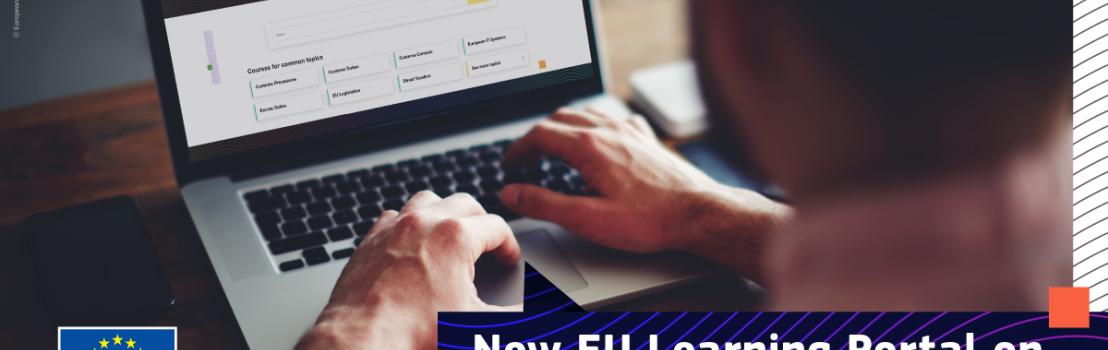
Are you a customs or tax professional? Have you been looking for a space where you could access useful resources about the EU legislation, communicate with your peers and exchange good practices? You should explore the EU learning portal on customs and tax topics!

A new community of customs and tax professionals is up and running.


Discover the EU learning portal on customs and tax

National administrations, economic operators, national authority staff and European Commission officials, academia or researchers can now access the EU learning portal on customs and tax topics, as well as its numerous facilities.

One of the biggest added values of the portal is the learning catalogue, which offers an impressive number of courses, such as nanolearnings and eLearning modules, webinars and eBooks dedicated to a wide variety of topics - from EU legislation and direct taxation to fighting tax fraud.

Also worth noting is that the courses are offered in different EU languages, as well as Macedonian, Serbian and Turkish.


Focus on VAT

Are you looking for nanolearnings about Value Added Tax (VAT)? A quick search in the box will bring you to the most relevant and latest courses added to the catalogue.


The course ‘VAT - Directive implementation’ dedicated to Traders and Tax authorities aims to give tips on analysing a VAT problem and how tackle a sequence of questions to solve any issue related to VAT.

What’s more, the course ‘Fundamental conditions for VAT to apply’ provides easy-to-understand graphs that show, for example, the transactions subject to VAT under certain conditions. The course ‘Customs and VAT Territory’ aims to explain the differences between both these elements with the assistance of a concise presentation.

VAT is a topic of growing importance in the EU and worldwide, especially since 1 July 2021 when new e-commerce VAT rules have entered into force. This has allowed Member States to collect around EUR 1.9 billion in VAT revenues the same year.

Over 8 000 traders have now registered to use the ‘Import One-Stop Shop’ (IOSS) electronic portal, contributing to collect VAT for the distance sales. Check the nanolearnings on OSS and IOSS role and benefits, as well as on the procedures.

Other e-learning and nanolearning modules about VAT and e-Commerce rules are available in the catalogue under this link


Other features of the portal

The portal contains other information, such as a news section, a calendar of events and a page entirely dedicated to the EU Competency Frameworks (TaxCompEU - EU Competency Framework for Taxation and CustCompEU - EU Customs Competency Frameworks).


Another way to learn about tax

Designed for teachers and young learners, the TAXEDU portal offers plenty of resources to learn about tax and how taxation matters affect daily life. Take a look at our Teachers’ corner, training catalogue or cool stuff. Learning about tax can be fun!


Useful links

Discover the EU Learning Portal on customs and tax topics

You are an economic operator, have you heard about the EU Customs & Tax EU Learning Portal?

Modernised learning: Customs & Tax EU Learning Portal

New VAT rules for online purchases brought €1.9 billion in revenues for Member States in their first six months alone

Subscribe to