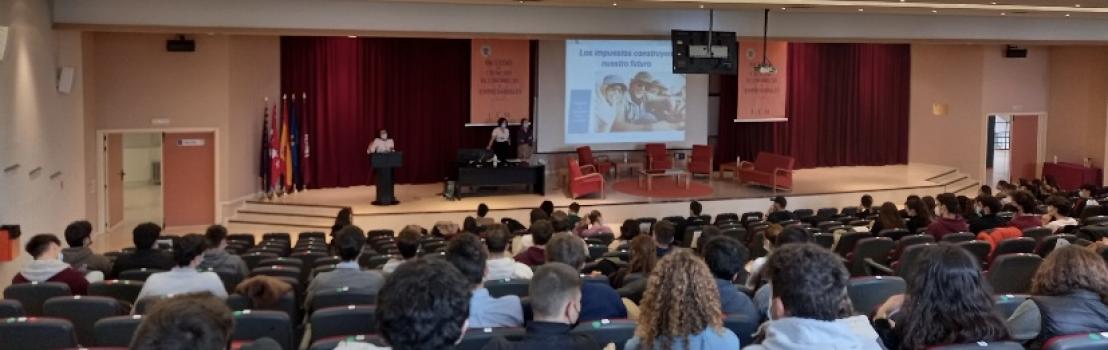
Meeting with students in the office of the National Revenue Agency Bulgaria in Veliko Tarnovo

National Revenue Agency - Bulgaria

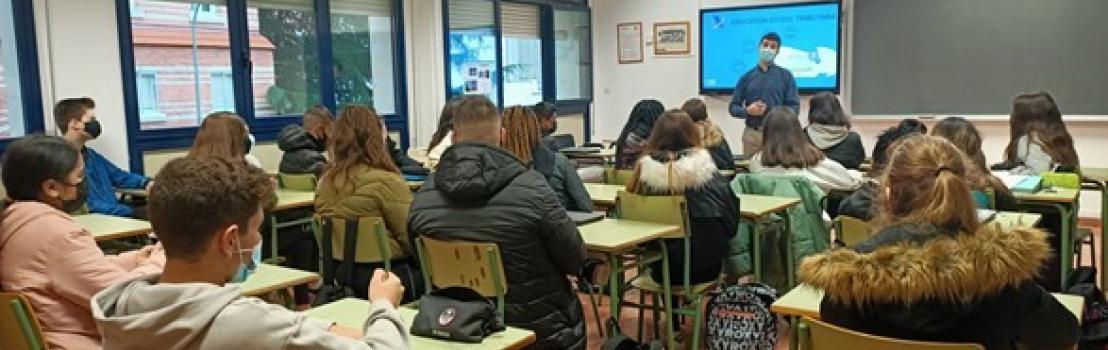
Students from Staroprestolna High School of Economics in Veliko Tarnovo, Bulgaria visited the regional office of the National Revenue Agency. The event took place as а part of World Money Week, organized by Junior Achievement Bulgaria.

During the event high school students learned more about tax and social security benefits and obligations.

--------------

В рамките на Световната седмица на парите, организирана от „Джуниър Ачийвмънт“, учениците от Старопрестолна професионална гимназия по икономика се срещнаха със служители на Национална агенция за приходите в офиса на териториалната дирекция във Велико Търново.

По повод завършването на училище и предстоящото навлизане на младите хора в активния живот, те бяха запознати с част от техните данъчни и осигурителни права и задължения.

Темата, която интересуваше дванадесетокласниците, беше свързана основно с все по-актуалните криптовалути. По-конкретно бяха обсъдени специфичните данъчно-счетоводни аспекти на финансовите активи и инструменти, както от гледна точка на предприятията, така и от гледна точка на физическите лица.

PECT Activities in Navarra, Spain


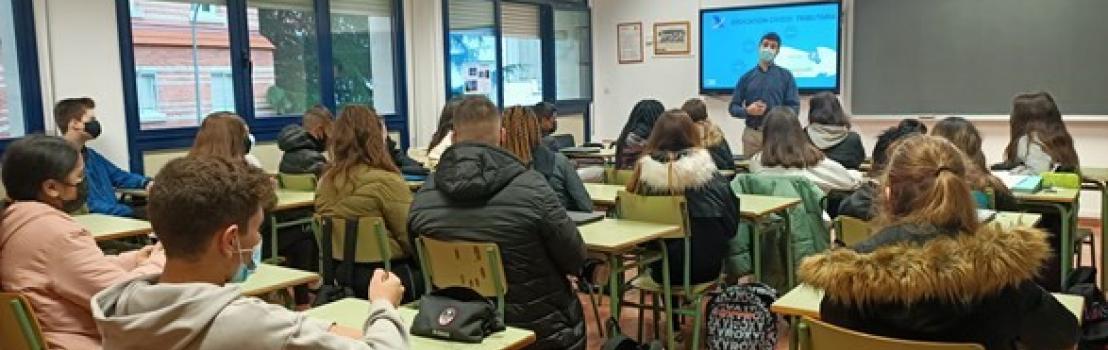
Overcoming the not very good current health situation derived from the pandemic, in the Special Delegation of Navarra we have participated in the Civic-Tax Education Program giving sessions in schools.

Our teacher Eduardo Sainz Goñi, went to the classrooms of the Navarro Villoslada Institute in Pamplona to explain to 4 eso and Baccalaureate groups, the fundamentals of the operation of the Public Treasury and the need for correct fiscal behavior from the first years.

The talks were very well received among the students and the teachers who teach the subject of Economics at the Institute, who were also present. With the satisfaction of having transferred knowledge about the importance of the tax system and seeing how these concepts were internalized and debated in the classroom, it is planned to continue with this Program and expand the number of sessions and educational centers included in it.

For our part, a recognition to the trainers of the Tax Civic Education Program for the good work done in this important task.

Actividades PECT en Navarra, España


Superando la no muy buena situación sanitaria actual derivada de la pandemia, en la Delegación Especial de Navarra hemos participado en el Programa de Educación Cívico-Tributaria impartiendo sesiones en los centros escolares.

Nuestro profesor Eduardo Sainz Goñi, se desplazó a las aulas del Instituto Navarro Villoslada de Pamplona para explicar a 4 grupos de ESO y de Bachillerato, los fundamentos del funcionamiento de la Hacienda Pública y la necesidad de un comportamiento fiscal correcto desde los primeros años.

Las charlas tuvieron muy buena acogida entre el alumnado y las profesoras que imparten la asignatura de Economía en el Instituto, que también estuvieron presentes. Con la satisfacción de haber trasladado conocimientos acerca de la importancia del sistema tributario y de ver cómo estos conceptos eran interiorizados y debatidos en el aula, se prevé continuar con este Programa y ampliar el número de sesiones y centros educativos incluidos en ella.

Por nuestra parte, un reconocimiento a los formadores del Programa de Educación Cívico Tributaria por el buen trabajo que se realiza en esta importante tarea.

Have your say on future taxation rules

Editorial Team


Are you running a business in the EU? Do you have ideas on how you would like to report on Value Added Tax (VAT)? This is the perfect time to make your voice heard! The Commission is currently organising a public consultation on this very important topic.

Fair and simple taxation has become the motto of the European Commission in the light of the digital age.

Value Added Tax (VAT) rules represent the core of this strategy, as a legislative proposal on ‘VAT in the digital age’ is in the pipeline for 2022. The proposal covers VAT reporting obligations and e‑invoicing, VAT treatment of the platform economy, as well as single EU VAT registration.

To ensure that the legislative proposal will reach its objectives, the Commission is currently conducting a public consultation for the attention of business federations, small and medium-sized enterprises (SMEs), trade associations, companies, EU-wide and national service providers, platforms and many other actors involved.

Running until 5 May, the consultation is seeking to understand how to make the VAT system easier for business to comply with, how to make it more fraud-proof and how to improve digital and technological developments.

In particular, the questionnaire focuses on Digital Reporting Requirements, on the VAT Treatment of the Platform Economy and on the Single VAT Registration.

Does this sound like you? Take the following questionnaire!

Entering the 21st Century

This consultation is in line with the long-term vision expressed by the Commission in the Communication on Business Taxation for the 21st Century.  

Aiming to create a new framework for business taxation in the EU, this communication exposes the plans of the Commission to reduce administrative burdens, remove tax obstacles and foster a more business-friendly environment in the Single Market.

Also worth noting is the “Business in Europe: Framework for Income Taxation” (or BEFIT) which will provide a single corporate tax rulebook for the EU, based on a formulary apportionment and a common tax base.

Talk about VAT with your students

Future business owners are perhaps among your students! Spark their interest around the topic by browsing the numerous modules on VAT in our Teachers’ corner. Your students will have a sneak preview of what they can expect in terms of administration and tax when managing a business. We wish you fruitful discussions!

Future entrepreneurs

Are you completing your studies and thinking about creating your own business? The TAXEDU section dedicated to young adults gives you some tips and useful links on how to get started.

Our module How to start a business can also inspire you in our training catalogue’s section, together with other modules, such as Business income, Employment income and When taxes appear in youngsters’ life. You can browse also our MOOCs’ section. Happy learning!


Learn more about the public consultation on VAT in the digital age

Take the survey

Learn more about the Communication on Business Taxation for the 21st Century

The National Revenue Agency Bulgaria organized a children's drawing competition

National Revenue Agency - Bulgaria

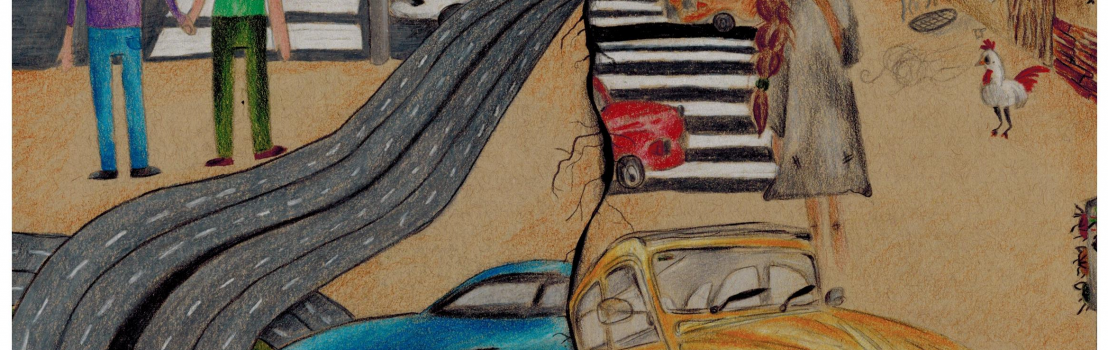
The National Revenue Agency Bulgaria organized a children's drawing competition "Taxes We Can't Do Without". Numerous drawings have been obtained from children up to 16 years. They are showing what they think How Does the Government Spend Taxes & why it is good to collect them in full. Thirteen of the most successful drawings were selected and printed in the NRA calendar for 2022.

Author of the drawing: Boyana Kardzhieva, 14 years

------------------------

Националната агенция за приходите в България организира конкурс за детска рисунка на тема „Данъците без които не можем“. Получени са множество рисунки, с които деца до 16 годишна възраст представят за какво, според тях, държавата използва данъците и защо е добре те да бъдат събирани в пълен размер. Тринайсет от най-сполучливите рисунки бяха селектирани и поместени в календар на НАП за 2022.

Автор на рисунката: Бояна Кърджиева, 14 години


La Educación Cívico-Tributaria en la Universidad, un proyecto necesario y enriquecedor para la Agencia Tributaria

Begoña Hernando Polo

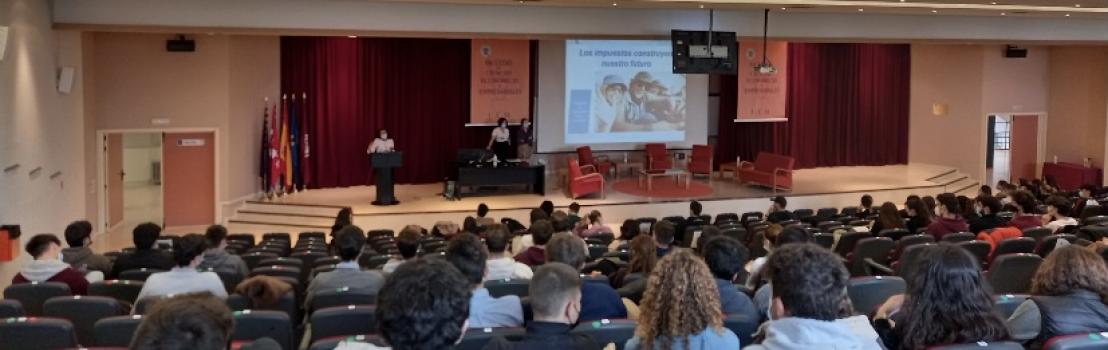
Llevamos tres años consecutivos impartiendo unas jornadas de educación cívico-tributaria en la Universidad Complutense. Durante estas jornadas, compañeros de la Delegación de todas las áreas funcionales y Relaciones Institucionales tratamos de transmitir cómo trabaja la Agencia Tributaria (AEAT) y en qué se fundamenta nuestra actuación, cuyo mandato primero se incardina en la Constitución y, en concreto en el artículo 31 de la misma.

Subrayo lo de transmitir, porque en la sociedad actual, donde impera la inmediatez y la accesibilidad a mucha información, no es nada fácil, hablar de servicio público y captar la atención e interesar a chic@s de 20-22 años, por funcionarios  que no somos  profesionales en el mundo de la comunicación,  pero las encuestas hablan por sí mismas: con un foro de más de 70 alumnos, y 44 encuestas contestadas las jornadas han gustado mucho a un 86,36% de los alumnos y, entre ellos, un número significativo dice que ha descubierto su futuro profesional entre nosotros.

Como valoración personal no puedo sino mostrarme orgullosa de este proyecto, que surgió tras haber visto algunas prácticas que se realizaban en otras delegaciones y en otros países y haber sido testigo de la estupenda labor que los formadores de los colegios llevan a cabo en centros escolares desde el 2003. Esta idea se materializó gracias al esfuerzo y trabajo de muchos compañeros, que intervienen o han intervenido en el pasado en las jornadas que en estos 3 años llevamos realizando en la Universidad.

El PECT es un proyecto precioso y tremendamente necesario en la AEAT, basta acudir a una clase en un colegio, o una jornada en la universidad, y ver el agradecimiento y buena acogida por profesores y el interés inesperado que despierta en los alumnos. El ámbito de la educación cívica está presente cada vez en más órdenes de nuestra sociedad: educación vial, financiera, consumo responsable…y la AEAT debe intentar estar en primera línea, no solo porque forma parte de su objetivo principal de fomento del cumplimiento voluntario, sino como institución de vanguardia y de prestigio que es. La Unión Europea se ha sumado recientemente a este proyecto al lanzar en noviembre de 2018 su portal (TAXEDU), cuyos objetivos compartimos al 100%, tal como cita en su web:

  • contribuir a la educación de la juventud europea en materia tributaria;
  • reducir la evasión y el fraude fiscal en Europa, a través de mejoras en la educación y en la información;
  • hacer saber a los ciudadanos europeos qué servicios son posibles gracias a la recaudación de impuestos (educación, sanidad, etc.).

 ¿Cómo lo hacemos?:

- contando con unos funcionarios entusiastas de su trabajo y de la “cosa pública”, que no dudan en ceder una parte de su tiempo para poner en valor su profesión, la institución en la que la desarrollan y el bien público al que sirven.

- utilizando herramientas que tratan de lograr interactuar con los alumnos:   presentaciones muy gráficas, apoyo de vídeos, acceso on line a herramientas del portal AEAT, encuesta virtual y dinámica de grupo.

Asimismo, el apoyo de la Delegada Especial y del SEPRI es fundamental: el año 2019 impulsó un Protocolo de colaboración entre la AEAT y la Universidad que ha supuesto el marco institucional a las actividades que se venían desarrollando y que ha sido la respuesta a la solicitud que se venía realizando desde esta Dependencia de Relaciones Institucionales. Dicho protocolo ha sido suscrito por 4 universidades públicas (UCM, UAM, UC3M y UPM) y está pendiente en otra más (URJC).

PECT at the University, a necessary and enriching project for AEAT

Begoña Hernando Polo

We have been teaching a conference on civic-tax education at the Complutense University for three consecutive years. During these days, colleagues of the Delegation from all functional areas and Institutional Relations try to convey how the Tax Agency (AEAT) works and what our action is based on, whose mandate is first included in the Constitution and, specifically, in article 31 of it.

I emphasize what to transmit, because in today's society, where immediacy and accessibility to a lot of information prevail, it is not easy, to talk about public service and capture the attention and interest of chic@s 20-22 years old, by officials who are not professionals in the world of communication, but the surveys speak for themselves:  with a forum of more than 70 students, and 44 surveys answered the days have liked very much to 86.36% of the students and, among them, a significant number say that they have discovered their professional future among us.

As a personal assessment, I can only be proud of this project, which arose after having seen some practices that were carried out in other delegations and in other countries and having witnessed the great work that the trainers of the schools carry out in schools since 2003. This idea materialized thanks to the effort and work of many colleagues, who intervene or have intervened in the past in the days that in these 3 years we have been doing at the University.

The PECT is a beautiful and tremendously necessary project in the AEAT, just go to a class in a school, or a day at the university, and see the gratitude and good reception by teachers and the unexpected interest it arouses in the students. The field of civic education is increasingly present in more orders of our society: road safety education, financial, responsible consumption ... and the AEAT must try to be in the front line, not only because it is part of its main objective of promoting voluntary compliance, but as a vanguard and prestigious institution that it is. The European Union has recently joined this project by launching in November 2018 its portal (TAXEDU), whose objectives we share 100%, as cited on its website:

  • contribute to the education of European youth in tax matters;
  • reducing tax evasion and fraud in Europe, through improvements in education and information;
  • let European citizens know what services are possible through tax collection (education, health, etc.).

 How do we do it?:

- counting on officials enthusiastic about their work and the "public thing", who do not hesitate to give up a part of their time to value their profession, the institution in which they develop it and the public good they serve.

- using tools that try to interact with students: very graphic presentations, video support, online access to tools of the AEAT portal, virtual survey and group dynamics.

Likewise, the support of the Special Delegate and SEPRI is fundamental: in 2019 it promoted a Collaboration Protocol between the AEAT and the University that has meant the institutional framework for the activities that were being developed and that has been the response to the request that had been made from this Institutional Relations Unit. This protocol has been signed by 4 public universities (UCM, UAM, UC3M and UPM) and is pending in another one (URJC).

Alla Global Money Week per parlare di fisco agli studenti


La Direzione regionale dell’Emilia Romagna dell’Agenzia delle Entrate prende parte alla Global Money Week, promossa dall’Ocse e coordinata in Italia dal Comitato per la pianificazione e il coordinamento delle attività di educazione finanziaria. L’iniziativa si svolge dal 21 al 27 marzo e il tema dell’edizione 2022 è ““Costruisci il tuo futuro, gestisci bene il tuo denaro”. L’Agenzia delle Entrate ha organizzato due eventi. Il primo è promosso in collaborazione con l’Agenzia delle entrate-Riscossione e coinvolge studenti delle scuole superiori. Durante la lezione le due Agenzie utilizzano un quaderno didattico interattivo per spiegare l’importanza di pagare le tasse. Il secondo incontro, organizzato con Inps e Regione Emilia Romagna, ha l’obiettivo, invece, di illustrare i cambiamenti introdotti nel 2022 per l’imposta sul reddito delle persone fisiche e il nuovo assegno unico universale per i figli. 

La Global Money week è un invito rivolto a ragazzi e bambini, inclusi quelli in età pre-scolare, sull’importanza di acquisire gradualmente la conoscenza e I comportamenti che li aiuteranno a sviluppare abitudini di risparmio intelligenti e a rendere le loro future decisioni finanziarie coerenti con le loro necessità e le loro abilità. 

Language
Italiano

Talking to students about taxes at Global Money Week

Editorial Team


The Emilia Romagna Regional Directorate of the Italian Revenue Agency is participating in Global Money Week, promoted by the OECD and coordinated in Italy by the Committee on the planning and coordination of financial education activities. The initiative takes place from 22 to 28 March and the theme of the 2022 edition is “Take care of yourself, take care of your money”. The Italian Revenue Agency has organised two events. The first is promoted in collaboration with the Revenue Collection Agency and involves high school students. The two agencies use a digital educational notebook to explain the importance of paying taxes. The second event has the aim to illustrate the changes introduced in 2022 concerning personal income tax and the new universal single allowance for children.


Global Money Week is an invitation to young people and children, including pre-school children, on the importance of gradually acquiring the knowledge and behaviours that will help them develop smart saving habits and make future financial decisions consistent with their needs and possibilities.


Subscribe to