





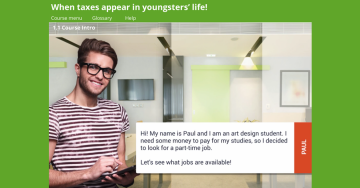
At the end of this module, you will have a better understanding of:
• what is income tax
• what is employment income
• the negative effects of ‘shadow economy’ and ‘grey economy’ on individuals
• the role of the social security contributions paid by employees
The content of this training course:
- is of general nature only and is not intended to address the specific circumstances of any particular individual or entity;
- does not provide professional or legal advice;
- is valid as of the date of its publication. Updated VAT rates can be consulted on EUROPA.
Only European Union legislation published in the Official Journal of the European Union is deemed authentic.
Purpose:
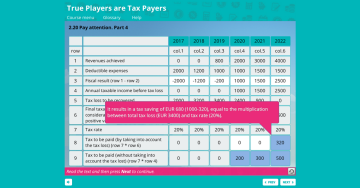
Students to have an interesting discussion about how they can start and maintain their own business, their income tax and tax exemptions.
Objectives:
The lesson can prove to be very useful as a resource teachers can recommend in preparation for a class on Ethics. The students can be provided with a list of concepts they need to follow throughout the lesson, such as:
• What taxes are paid by entrepreneurs?
• What are possible tax exemptions?
• How to calculate taxes.
• How much can one earn as a teen tax consultant?
The content of this training course:
- is of general nature only and is not intended to address the specific circumstances of any particular individual or entity;
- does not provide professional or legal advice;
- is valid as of the date of its publication. Updated VAT rates can be consulted on EUROPA.
Only European Union legislation published in the Official Journal of the European Union is deemed authentic.
Materials:
Course “True Players are Taxpayers”
Interactive whiteboard (or just an LCD projector)
Vocabulary:
Entrepreneurs, taxes, taxation, tax consultant, tax exemptions
Purpose:
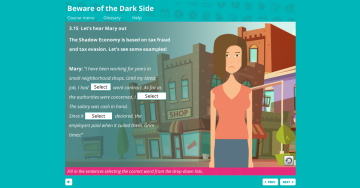
Students are to have an interesting discussion about Shadow Economy and the way it slowly dries out any public budget it touches and makes the public services wilt.
Objectives:
The lesson can prove to be a very useful as a resource teachers can recommend in preparation for a class on Ethics. The students can be provided with a list of concepts they need to follow throughout the lesson, such as:
• What is Tax Evasion and how could I avoid it?
• What consequences do “shady tax practices” have?
• How do I get my taxes in order?
• What is Resistance to Taxation?
The content of this training course:
- is of general nature only and is not intended to address the specific circumstances of any particular individual or entity;
- does not provide professional or legal advice;
- is valid as of the date of its publication. Updated VAT rates can be consulted on EUROPA.
Only European Union legislation published in the Official Journal of the European Union is deemed authentic.
Materials:
Course “Beware of the Dark Side”
Interactive whiteboard (or just an LCD projector)
Vocabulary:
taxes, taxation, resistance, tax evasion, tax practices
Purpose:
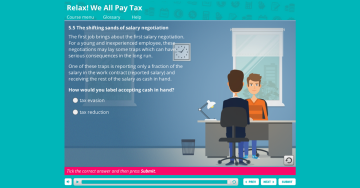
Students to have an interesting discussion about the first job, responsibilities, tax evasion and taxation that can actually help enjoy earnings more.
Objectives:
The lesson can prove to be a very useful as a resource teachers can recommend in preparation for a class on Ethics. The students can be provided with a list of concepts they need to follow throughout the lesson, such as:
• What is before-tax income?
• What is after-tax income?
• When can a teenager get hired?
• Do teens have fiscal responsibilities?
• Why do taxpayers have to fill in the annual fiscal declaration?
• What is tax exemption?
The content of this training course:
- is of general nature only and is not intended to address the specific circumstances of any particular individual or entity;
- does not provide professional or legal advice;
- is valid as of the date of its publication. Updated VAT rates can be consulted on EUROPA.
Only European Union legislation published in the Official Journal of the European Union is deemed authentic.
Materials:
Course “Relax! We all pay tax.”
Interactive whiteboard (or just an LCD projector)
Vocabulary:
taxes, taxation, taxpayers, fiscal responsibilities, fiscal declaration, tax exemption
Purpose:
Students shall have an interesting discussion about taxes and to understand their logic.
Objectives:
The lesson can prove to be a very useful as a resource teachers can recommend in preparation for a class on Ethics. The students can be provided with a list of concepts they need to follow throughout the lesson, such as:
• What are the main characteristics of taxes?
• What are taxes used for? Why?
• How do you support social solidarity through taxation?
• Are all taxes the same? What’s the difference?
• Why do we need both local and national taxes?
• Who is responsible for paying taxes?
The content of this training course:
- is of general nature only and is not intended to address the specific circumstances of any particular individual or entity;
- does not provide professional or legal advice;
- is valid as of the date of its publication. Updated VAT rates can be consulted on EUROPA.
Only European Union legislation published in the Official Journal of the European Union is deemed authentic.
Materials:
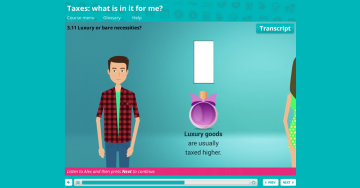
Course “Taxes: what’s in it for me?”
Interactive whiteboard (or just an LCD projector)
Vocabulary:
taxes, taxation, local taxes, national taxes, social solidarity