
BACK TO THE CLASSROOM IN LEÓN, SPAIN

BACK TO THE CLASSROOM IN LEÓN, SPAIN

Valentín Vaquero Prieto from León Delegation, Spain


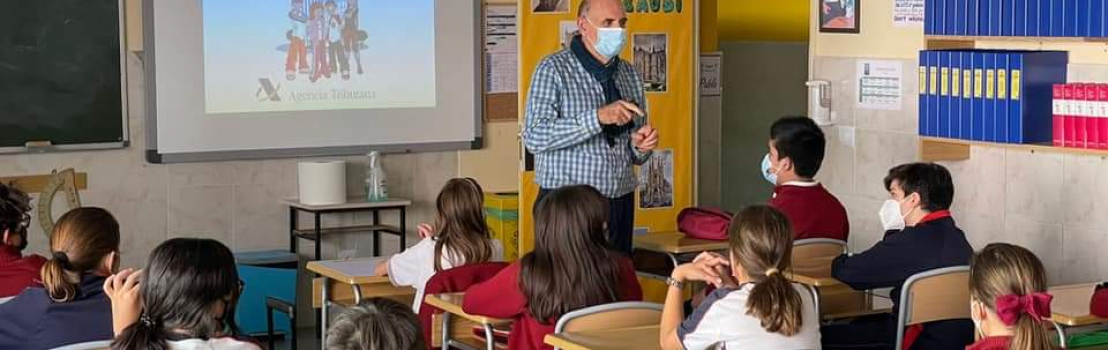
We have returned to the classrooms, after the health crisis, we are back with the schoolchildren.

We really wanted to feel the feeling of meeting the students again.

Although we have carried out telematic actions, our presence in the classrooms was very necessary.

Showing them our civic-tax education program and the European Union portal, TAXEDU, and seeing their reactions and hearing their comments is something we missed.

And we believe that both schoolchildren and teachers also missed our presence in their schools.

Explaining to children what taxes are for is one of our goals. Demonstrating how tax education is an important part of values education is the purpose of our activities in schools and institutes.

And for this we have two very powerful tools, TAXEDU and the Civic-Tax Education portal of the AEAT. And showing them live is an unmistakable sign that we are back to normal.

Two new digital products for students

Two new digital products for students

Editorial Team

Italian Revenue Agency, in collaboration with the Revenue Collection Agency, has produced two educational notebooks, one for the primary schools (age 5-10) and one for the secondary schools (age 11-18).

The booklets are available on line, on the Revenue Agency website and they can be used by students, teachers and families, both in the classroom and at home.

The two editorial products use a simple language and contain multimedia elements, such as links to movies, videos, cartoons and songs. The aim is to explain the importance of paying taxes and of respecting rules and laws, using a language near to the interests of children and students.

The booklets contain a page dedicated to TAXEDU and to the activities of European Union for children and teenagers like the Learning corner website.

Privacy Statement

1. Introduction

The European Commission (hereafter ‘the Commission’) is committed to protect your personal data and to respect your privacy. The Commission collects and further processes personal data pursuant to Regulation (EU) 2018/1725 of the European Parliament and of the Council of 23 October 2018 on the protection of natural persons with regard to the processing of personal data by the Union institutions, bodies, offices and agencies and on the free movement of such data (repealing Regulation (EC) No 45/2001).

This privacy statement explains the reason for the processing of your personal data, the way we collect, handle and ensure protection of all personal data provided, how that information is used and what rights you have in relation to your personal data. It also specifies the contact details of the responsible Data Controller with whom you may exercise your rights, the Data Protection Officer and the European Data Protection Supervisor.

The information in relation to processing operation “TAXEDU” undertaken by DG TAXUD – Unit E.3. is presented below.

2. Why and how do we process your personal data?

Purpose of the processing operation:

Unit E.3 of DG TAXUD collects and uses your personal information to support the access to the TAXEDU portal. 

TAXEDU portal is a European Union project, developed jointly with DG TAXUD as an eLearning portal that provides, in a funny and creative way, tax education for young people. It is an EU-wide e-Portal, translated into 23 languages, that provides educational materials.


Processing of personal data is necessary for the users of the platform:


  • REGISTERED USERS. The registration allows users (citizens, teachers) to create their own account and thus the access is granted to the interactive features of TaxEdu portal in order to: manage subscriptions, content upload on the Training Catalogue and Teacher’s corner, upload of the News, report of uploaded resources options; 
  • TaxEdu EDITORS (national promoters of tax education for young people - representatives of national administrations). The account allows editors to have access to the interactive features of TaxEdu portal in order to: manage subscriptions, upload News and Events articles, Content upload on the Training Catalogue and Teacher’s corner, moderate the uploaded materials by Teachers Editors, receive a notification by email when new content is uploaded, report of uploaded resources options.
  • Visitors of the platform can simply visit it with no interaction (no registration needed; no personal data requested). Nevertheless, following interactions require to provide personal data: contact form, reporting an issue on a resource.

For users, processing of personal data is also necessary to

  • diagnose and resolve problems and to deal with security incidents;
  • respond to questions of users and provide effective technical service and support;
  • link the existing username with the email address;
  • ensure that the users that subscribed by typing their e-mail address or by checking this option, receive the e-mails;
  • ensure communication and redirect users to the TaxEdu national contacts if needed;
  • perform interactions on the platform between Editors and administrators with the concrete users (teachers, students, officials etc) ;
  • to send the Newsletter to subscribed users.

Your personal data will not be used for an automated decision-making including profiling.

3. On what legal ground(s) do we process your personal data

Your personal data is processed on the basis of the Regulation (EU) 2018/1725, ART. 5.1. d): “The data subject has given consent to the processing of his or her personal data for one or more specific purposes”.

We process your personal data because processing is necessary for the performance of a task carried out in the public interest or in the exercise of official authority vested in the Union institution or body and compliance with a legal obligation to which the controller is subject.

DG TAXUD, Unit E3 acts as a controller and decides ‘why’ and ‘how’ the personal data is used to ensure the functioning, management and promotion of the TaxEdu portal.

4. Which personal data we collect and further process?

We collect personal data from both the public and private sector.

Personal data collected for registered users, including TAXEDU editors:

  1. Identification data created by the user in EU-Login: EU login username, first name, last name and email address.
  2. User profile data, data provided by the user for his profile: site language, time zone and teacher (yes/no)
  3. Newsletter subscriptions

Personal data collected for visitors during interactions:

  1. Identification data to connect with TAXEDU through a form: first name, last name, country and email address.
  2. Identification data to report an issue on a resource: name and email.

The provision of personal data is not mandatory to get a public access to the Portal.

However, the provision of personal data is mandatory to grant the registered users the proper access to some features of the portal.

5. How long do we keep your personal data?

Unit E.3. of DG TAXUD only keeps your personal data for the time necessary to fulfil the purpose of collection or further processing, namely for 12 months after inactive usage of the portal or until revocation.

Personal data can be deleted either by request of the users or after 12 months of inactivity.

You should take note of our functional email: support_taxedu@simavi.ro to request the deletion of your personal data

Inactive registered users are users who did not log into his/her account for 12 months starting from the date of the last use of the account as registered user.

6. How do we protect and safeguard your personal data?

All personal data in electronic format (e-mails, documents, databases, uploaded batches of data, etc.) are stored either on the servers of the European Commission or of its contractors. All processing operations are carried out pursuant to the Commission Decision 2017/46 of 10 January 2017 on the security of communication and information systems in the European Commission.

The Commission’s contractors are bound by a specific contractual clause for any processing operations of your data on behalf of the Commission, and by the confidentiality obligations deriving from the transposition of the General Data Protection Regulation in the EU Member States (‘GDPR’ Regulation (EU) 2016/679.]

In order to protect your personal data, the Commission has put in place a number of technical and organisational measures in place. Technical measures include appropriate actions to address online security, risk of data loss, alteration of data or unauthorised access, taking into consideration the risk presented by the processing and the nature of the personal data being processed. Organisational measures include restricting access to the personal data solely to authorised persons with a legitimate need to know for the purposes of this processing operation.

7. Who has access to your data and to whom is it disclosed?

a. INTERNALLY

Access to registered users data is provided to authorised employees according to the “need to know” principle. Such staff abide by statutory, and when required, additional confidentiality agreements.

The recipients of personal data inside unit E.3 from DG TAXUD are:

  • responsibles for portal maintenance;
  • training team for the purpose of generating analytics reports.

b. EXTERNALLY

Data processor contracted by unit E.3. for the development, maintenance and support of the portal (call for tender TAXUD/2023/OP/0005).

  • SOFTWARE IMAGINATION & VISION SRL,Victoria Park, 73-81 Bucuresti-Ploiesti Drive, District 1, Building C4, RO-013685 Bucharest, VAT registration number: RO41963989 , Tel: +40 722 458 953 

  • INTRASOFT International SA, 2b Rue Nicolas Bové, L – 1253 Luxembourg, VAT registration number LU16853659

  • eLearning & Software S.R.L. (ELSO), 122 Dunarii street - 310486 Arad - Romania, VAT registration number RO23947365

The databases and hosting are under DIGIT’s management. Access to the data is done by a limited number of authorized users and on a need-to-know basis (access needed in order to provide the services, for example to investigate and fix possible issues). All persons are either EC employees or have signed a Non-Disclosure Agreement (NDA) with the European Commission.

8. What are your rights and how can you exercise them?

You have specific rights as a ‘data subject’ under Chapter III (Articles 14-25) of Regulation (EU) 2018/1725, in particular the right to access, your personal data and to rectify them in case your personal data are inaccurate or incomplete. Where applicable, you have the right to erase your personal data, to restrict the processing of your personal data, to object to the processing, and the right to data portability.

You consent to provide your personal data to DG TAXUD, Unit E.3. for the present processing operation. You can withdraw your consent at any time by notifying the Data Controller. The withdrawal will not affect the lawfulness of the processing carried out before you have withdrawn the consent.

You can exercise your rights by contacting the Data Controller, or in case of conflict the Data Protection Officer. If necessary, you can also address the European Data Protection Supervisor. Their contact information is given under Heading Contact Information below.

Where you wish to exercise your rights in the context of one or several specific processing operations, please provide their description together with Record reference(s) DPR-EC-03726.3 in your request.

9. Contact information

  • The Data Controller

If you would like to exercise your rights under Regulation (EU) 2018/1725, or if you have comments, questions or concerns, or if you would like to submit a complaint regarding the collection and use of your personal data, please feel free to contact the Data Controller DG TAXUD, Unit E.3. using TAXUD-UNIT-E3@ec.europa.eu.

  • The Data Protection Officer (DPO) of the Commission

You may contact the Data Protection Officer (DATA-PROTECTION-OFFICER@ec.europa.eu) with regard to issues related to the processing of your personal data under Regulation (EU) 2018/1725.


  • The European Data Protection Supervisor (EDPS)

You have the right to have recourse (i.e. you can lodge a complaint) to the European Data Protection Supervisor (edps@edps.europa.eu) if you consider that your rights under Regulation (EU) 2018/1725 have been infringed as a result of the processing of your personal data by the Data Controller.

10. Where to find more detailed information?

The Commission Data Protection Officer (DPO) publishes the register of all processing operations on personal data by the Commission, which have been documented and notified to him. You may access the register via the following link: http://ec.europa.eu/dpo-register.

This specific processing operation has been included in the DPO’s public register with the following Record reference: DPR-EC-03726.3
Tax Education in the new normal, CADIZ, SPAIN

Tax Education in the new normal, CADIZ, SPAIN

Salvador San Martín Jimenez from Cádiz Delegation


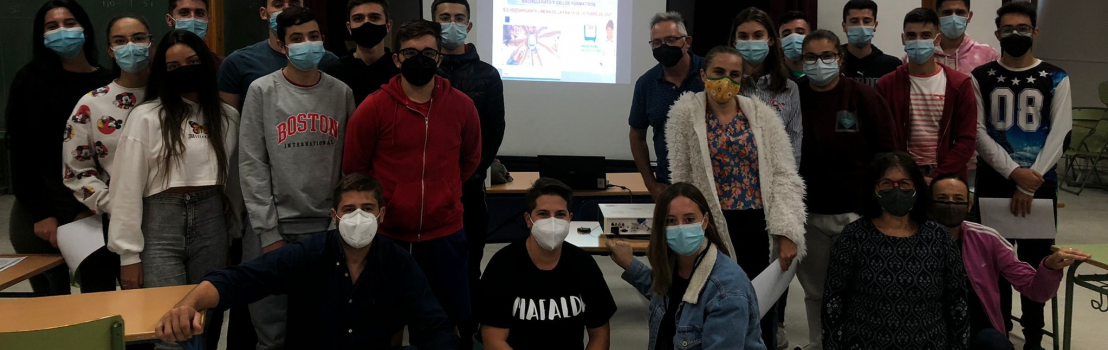
After the worst of the Pandemic, in the Cádiz Delegation, we resumed with more enthusiasm than ever the activities of the Civic Tax Education Program, at first, we thought that the centers were not going to be receptive, in this new normality, but This has not been the case, 99% of the centers have requested our activities.


At first, we had our doubts: How are the classes with a mask going to be? Will the online system that some centers have requested, will it have the same effect? How will the students respond? How do we capture the attention of the students, will it be possible to maintain the feedback?
Well, those doubts have been cleared, we have already held face-to-face and virtual activities, in face-to-face ones, the only difference has been that both students and teachers are in the classroom with masks, and that the groups are now smaller and it is the modality most demanded by educational centers.


Regarding the novelty, this course has been the virtual modality, to which some centers have taken advantage of, and that I also think that it has come to stay. Honestly, if I can choose, I prefer the contact in the classroom with the student, in class you can immediately appreciate their interest, how they interact, their faces of astonishment in some situations. In the online mode, it is more difficult for the teacher to find out, if the student is more attentive, if the topic is interesting for them, to locate the leader of the group. That is why it is of vital importance, the contact with the teacher of the center before the beginning of the activity, requesting their active participation and their complicity, agreeing on a series of guidelines, to maintain the interest and interaction between students and speaker, in such a way that when a question is asked, the teacher takes the baton and encourages the students to participate.


But we also have to reflect, that virtual activities, in some circumstances are very positive, and in these times that depend on the evolution of the pandemic, it is a very useful tool, to continue with the activities, it also makes it possible to extend our Tax Civic Education Program, to the most remote places of our province, small towns and villages,  some of them located more than 100 km from our work centers, contributing to reduce the digital divide.


Salvador San Martin Jimenez.
Delegation of Cadiz 

Cómo el equipo de Barcelona traslada la actualidad a la Educación Cívico-Tributaria


Durante los dos últimos años, todos hemos constatado la importancia de la solidaridad y de la colaboración entre personas y países, y el papel relevante de  los impuestos en este asunto.


Los medios de comunicación nos han bombardeado con términos antes desconocidos, como coronavirus, velocidad de transmisión o aerosol pero también han hablado más que nunca de tributos, reparto de riqueza o estado de bienestar.


En las charlas de educación tributaria impartidas por los educadores de la sede de Barcelona de la Delegación Especial de Cataluña,  ya acostumbrábamos a aprovechar las noticias de actualidad para dar a conocer a  los jóvenes los detalles de nuestro sistema tributario y su importancia en el desarrollo de los países y, sobre todo, en la vida de las personas.


Así, durante el confinamiento, preparamos nuevas presentaciones que nos permiten mayor dinamismo, creamos juegos que ponen a prueba sus conocimientos sobre impuestos, recopilamos vídeos y noticias con la opinión de personajes famosos sobre fiscalidad. En definitiva, utilizamos herramientas informáticas bien conocidas por ellos, junto con los recursos que nos ofrecen TAXEDU y el portal de Educación Tributaria de la AEAT, para explicarles y darles a conocer para qué sirven los impuestos; pero, más aún, para animarles a pensar, a opinar, a ser ciudadanos activos en la construcción de un mundo más justo para todas y todos


Carmen Verdejo
DRI Cataluña

Language
Español

Защо трябва да говорим с тинейджърите за данъците


Данъците са последното нещо, за което може да мислят тинейджърите, но те са важна част от гражданското образование. В TAXEDU има много съвети, които ще ви помогнат да започнете.

Тинейджърите, разбира се, са чували за данъци – по новините и от родителите си, но вероятно трудно ги свързват със своята действителност. Ето тук TAXEDU може да помогне, като обяснява как данъците допринасят за всички неща, които улесняват живота – от изграждането и поддържането на инфраструктурата и обществените сгради до грижите за бабите и дядовците ни и за хората, нуждаещи се от медицинска помощ.

Нещо повече, обяснени са и конкретните видове данъци – от данъка за физическите лица и данъка върху имотите до екологичния данък и данъка върху потреблението.

TAXEDU не само събира цялата тази информация – тя е готова за ползване от ученици и учители. В уебсайта на TAXEDU има съвети как данъчното обучение да стане разбираемо и забавно за тинейджърите.

Вижте четири съвета от TAXEDU!


Съвет 1: Заинтригувайте ги

Днешните тинейджъри прекарват много време онлайн: теглят музика, гледат филми, пазаруват, играят видеоигри и чатят с приятели. Отреденият за тинейджърите раздел в TAXEDU показва как дейностите онлайн са свързани с данъците и представя добрите практики, които да прилагаме при пазаруване онлайн.


Съвет 2: Работа през лятото

Тъй като повечето тинейджъри намират работа през лятото, за тях е важно да познават правилата за наемане на работа и данъчно облагане, които се отнасят за тях. Те лесно могат да научат за това от Анна – тинейджърка от TAXEDU, която си търси работа в Люксембург през лятото.


Съвет 3: Осветяване на сивия сектор

Правата върху интелектуална собственост и фалшифицирането са две важни понятия, които засягат тинейджърите. TAXEDU дава за пример Тина, която иска да слуша последния албум на Лейди Лала. Да си го купи ли от музикалния магазин, да го свали ли от интернет, или да купи компакт диска от сергия на пазара на много ниска цена? TAXEDU помага на тинейджърите да разберат тези проблеми и разяснява как да избягват купуването на фалшификати.


Съвет 4: Дарения за благотворителност

Не трябва да се подценява значението на общественополезния труд, доброволчеството и дарителството. В някои държави даренията за НПО, фондации и благотворителни организации – от финансиране на медицински изследвания до поддържане на исторически сгради – се ползват с данъчни облекчения. TAXEDU обяснява как става това.


Още съвети

Language
Български

Proč s náctiletými probírat daně


Daně jsou pravděpodobně to poslední, na co náctiletí myslí, ale je to důležitá součást občanské výchovy. Na portále TAXEDU najdete spoustu tipů, jak začít.

Náctiletí o daních samozřejmě něco zaslechli – ve zprávách nebo od rodičů, ale nejspíš si je těžko spojí s reálným životem. A právě v tomto směru může portál TAXEDU pomoci, protože tam najdeme vysvětlení, jak daně přispívají ke všemu, co nám usnadňuje život: od budování a správy infrastruktury a staveb až po péči o naše prarodiče a všechny, kteří potřebují lékařskou péči.

Jsou zde navíc vysvětleny jednotlivé typy daní – od daně fyzických osob přes daň z nemovitosti, ekologickou a spotřební daň až po DPH.

Všechny tyto a další informace jsou pro studenty a učitele v konsolidované formě k dispozici na webu TAXEDU. Na webu TAXEDU najdou učitelé tipy, jak výuku v oblasti daní zacílit na náctileté a předat jim ji zábavnou formou.

Podívejte se na čtyři tipy TAXEDU!


Tip 1: Zaujměte je

Dnešní náctiletí tráví spoustu času na internetu, stahují hudbu, sledují videa, nakupují, hrají hry a chatují s přáteli. V sekci portálu TAXEDU věnované náctiletým ukazujeme, jak online aktivity souvisí s daněmi, a shrnujeme osvědčené postupy, které je vhodné dodržovat při nákupu na internetu.


Tip 2: Letní brigáda

Vzhledem k tomu, že si většina náctiletých hledá letní brigády, měli by vědět, jaká pravidla se na ně v souvislosti s prací a daněmi vztahují. Mohou se to snadno dozvědět od Anny, slečny z portálu TAXEDU, která si hledá letní brigádu v Lucembursku.


Tip 3: Posviťte si na černý trh

Práva duševního vlastnictví a padělání jsou dvě významná témata, která se náctiletých také týkají. Portál TAXEDU ukazuje příklad Tiny, která si chce poslechnout nejnovější album Lady Laly. Měla by si album koupit v obchodě, stáhnout ho nebo si koupit cédéčko za pár korun u stánku? Portál TAXEDU náctiletým radí ohledně těchto témat a také toho, jak se vyhnout nákupu padělků.


Tip 4: Dary na dobročinné účely

Význam veřejně prospěšných prací, dobrovolnických a dárcovských aktivit by se neměl podceňovat. V některých zemích je darování nevládním organizacím, nadacím a charitám  – ať už jde o ty, které financují lékařský výzkum, nebo spravují památkově chráněné budovy – spojeno s daňovými úlevami. Na portále TAXEDU se dočtete, jak to funguje.


Další tipy


Language
Čeština

Warum wir mit Jugendlichen über Steuern sprechen sollten


Steuern sind vermutlich das Letzte, womit sich Jugendliche beschäftigen, doch trotzdem sind sie ein wichtiger Teil der politischen Bildung. TAXEDU bietet viele Tipps für den Einstieg.

Natürlich haben Jugendliche schon von Steuern gehört – in den Nachrichten und von ihren Eltern. Aber wahrscheinlich fällt es ihnen schwer, sie mit ihrem Alltag in Verbindung zu bringen. Hier kann TAXEDU dabei helfen, zu erklären, wie Steuern zu allen Dingen beitragen, die das Leben einfacher machen – von der Schaffung und Erhaltung von Infrastruktur und öffentlichen Arbeiten zur Betreuung unserer Großeltern oder derer, die medizinische Hilfe benötigen.

Darüber hinaus werden außerdem bestimmte Arten von Steuern erklärt – von der Personen- und Vermögenssteuer bis zur Umwelt- und Verbrauchersteuer.

TAXEDU hat alle diese Informationen und noch vieles mehr zusammengefasst, bereit für Schüler und Lehrer. Die TAXEDU-Website enthält Tipps darüber, wie der Unterricht zum Thema Steuern für Jugendliche relevant und interessant gestaltet werden kann.

Sehen Sie sich unsere vier TAXEDU-Tipps an!


Tipp 1: Interesse wecken

Die Jugendlichen von heute verbringen viel Zeit im Internet, mit dem Herunterladen von Musik, Ansehen von Filmen, Einkaufen, Spielen und Chatten mit Freunden. Der speziell für Jugendliche bestimmte TAXEDU-Bereich zeigt, wie Online-Aktivitäten mit Steuern verbunden sind und erklärt das richtige Verhalten beim Online-Einkauf.


Tipp 2: Ferienjobs

Die meisten Jugendlichen suchen sich im Sommer einen Ferienjob und daher ist es für sie wichtig, über die für sie geltenden Beschäftigungsbestimmungen und Besteuerungen Bescheid zu wissen. Die Jugendlichen können dies von Anna lernen, einem TAXEDU-Teenager auf der Suche nach einem Ferienjob in Luxemburg.


Tipp 3: Informationen über den Schwarzmarkt

Geistige Eigentumsrechte und Produktpiraterie sind zwei wichtige Konzepte, die Jugendliche direkt betreffen. TAXEDU nimmt das Beispiel von Tina, die sich das neuste Album von Lady Lala anhören möchte. Sollte sie das Album im Musikgeschäft kaufen, es herunterladen oder die CD an einem Stand auf dem Markt zu einem sehr niedrigen Preis kaufen? TAXEDU hilft Jugendlichen dabei, diese Fragen zu beantworten und wie sie den Kauf von Fälschungen vermeiden können.


Tipp 4: Spenden für wohltätige Zwecke

Die Bedeutung von gemeinnütziger Arbeit, Freiwilligenarbeit und Spenden sollte nicht unterschätzt werden. In einigen Ländern bringen Spenden an NGOs, Stiftungen und gemeinnützige Einrichtungen – von solchen, die medizinische Forschung fördern zu solchen, die sich mit der Erhaltung historischer Gebäude befassen – eine Steuererleichterung mit sich. TAXEDU erklärt, wie es funktioniert.


Mehr Tipps


Language
Deutsch

Γιατί πρέπει να μιλάμε στους/στις εφήβους για τη φορολογία


Οι φόροι μπορεί να είναι το τελευταίο πράγμα που έχουν στο μυαλό τους οι έφηβοι, αποτελούν ωστόσο σημαντικό κομμάτι της αγωγής του πολίτη. Το TAXEDU σάς παρέχει πολλές συμβουλές για να ξεκινήσετε αυτήν τη διαδικασία.

Αναμφίβολα, οι έφηβοι θα έχουν ακούσει κάποια πράγματα για τους φόρους – από τις ειδήσεις και από τους γονείς τους, αλλά πιθανώς δυσκολεύονται να τους συσχετίσουν με την πραγματικότητά τους. Σε αυτό μπορεί να βοηθήσει το TAXEDU εξηγώντας πώς οι φόροι συνεισφέρουν σε όλα αυτά που κάνουν τη ζωή μας ευκολότερη – από την κατασκευή και τη συντήρηση υποδομών και δημόσιων έργων μέχρι την παροχή φροντίδας στους ηλικιωμένους της οικογένειάς μας και σε όσους χρειάζονται ιατρική βοήθεια.

Επιπλέον, επεξηγούνται και τα συγκεκριμένα είδη φόρων – από τον φόρο φυσικών προσώπων και ακίνητης περιουσίας μέχρι τον περιβαλλοντικό φόρο και τον φόρο κατανάλωσης.

Το TAXEDU συγκέντρωσε όλες αυτές και άλλες πληροφορίες και τις ετοίμασε για τους μαθητές/μαθήτριες και τους εκπαιδευτικούς. Ο διαδικτυακός τόπος TAXEDU περιλαμβάνει συμβουλές σχετικά με το πώς μπορεί η εκπαίδευση για τη φορολογία να αποκτήσει συνάφεια για τους/τις εφήβους και να γίνει διασκεδαστική.

Δείτε τέσσερις συμβουλές του TAXEDU!


Συμβουλή 1: Τραβήξτε το ενδιαφέρον τους

Οι έφηβοι αφιερώνουν σήμερα πολύ χρόνο στο διαδίκτυο, κατεβάζοντας μουσική, βλέποντας ταινίες, πραγματοποιώντας αγορές, παίζοντας παιχνίδια και συνομιλώντας με φίλους. Η ενότητα του TAXEDU που είναι αφιερωμένη στους/στις εφήβους παρουσιάζει τους τρόπους με τους οποίους σχετίζονται οι δραστηριότητες στο διαδίκτυο με τους φόρους και περιγράφει τις καλές πρακτικές που πρέπει να εφαρμόζουμε όταν κάνουμε ηλεκτρονικές αγορές.


Συμβουλή 2: Καλοκαιρινή εργασία

Εφόσον οι περισσότεροι έφηβοι βρίσκουν εργασία το καλοκαίρι, είναι σημαντικό να γνωρίζουν τους κανόνες απασχόλησης και φορολογίας όπως ισχύουν για αυτούς/-ές. Οι έφηβοι μπορούν εύκολα να μάθουν σχετικά με αυτό από την Άννα, μια έφηβο του TAXEDU που αναζητά καλοκαιρινή εργασία στο Λουξεμβούργο.


Συμβουλή 3: Παροχή διευκρινίσεων σχετικά με τη μαύρη αγορά εργασίας

Τα δικαιώματα διανοητικής ιδιοκτησίας και η παραποίηση/απομίμηση είναι δύο σημαντικές έννοιες που έχουν αντίκρισμα στους/στις εφήβους. Το TAXEDU αναφέρεται στο παράδειγμα της Χριστίνας που θέλει να ακούσει το τελευταίο άλμπουμ της Lady Lala. Να αγοράσει το άλμπουμ από το μουσικό κατάστημα, να το κατεβάσει ή να αγοράσει το CD από έναν πάγκο αγοράς σε χαμηλή τιμή; Το TAXEDU βοηθά τους/τις εφήβους να ασχοληθούν με αυτά τα ζητήματα και επισημαίνει τους τρόπους με τους οποίους μπορούν να αποφεύγουν την αγορά απομιμήσεων.


Συμβουλή 4: Φιλανθρωπικές δωρεές

Δεν πρέπει να υποτιμάμε τη σημασία της κοινωφελούς εργασίας, του εθελοντισμού και των δωρεών. Σε ορισμένες χώρες, οι δωρεές σε ΜΚΟ, ιδρύματα και φιλανθρωπικές οργανώσεις – από αυτές που χρηματοδοτούν την ιατρική έρευνα μέχρι εκείνες που συντηρούν κτίρια πολιτιστικής κληρονομιάς – οδηγούν σε φοροαπαλλαγές. Το TAXEDU εξηγεί πώς λειτουργεί αυτός ο μηχανισμός.


Περισσότερες συμβουλές


Language
Ελληνικά

¿Por qué deberíamos hablar con los adolescentes sobre impuestos?


Aunque puede que los adolescentes no muestren interés alguno por los impuestos, estos suponen una parte importante de la educación cívica. En TAXEDU podrá encontrar muchos recursos con los que inspirarse.

Por supuesto que los adolescentes ya habrán oído hablar de impuestos en las noticias o por medio de sus padres, pero es probable que les cueste ver lo relacionados que están con su vida. Y ahí es donde TAXEDU puede servir de ayuda para entender que los impuestos contribuyen a mejorar nuestra vida en ámbitos como la creación y el mantenimiento de las infraestructuras y obras públicas, o el cuidado de los ancianos de nuestras familias y de todo aquel que necesita asistencia médica.

Además, también se explican distintos tipos de impuestos, como los impuestos personales, los impuestos de los bienes inmuebles, los impuestos sobre el consumo o los impuestos medioambientales.

TAXEDU ha recopilado toda esta y mucha más información para estudiantes y profesores.  En el sitio web de TAXEDU encontrará consejos sobre cómo hacer que la educación fiscal resulte relevante y divertida para los adolescentes.

¡Aquí tiene los cuatro consejos de TAXEDU!


Consejo 1: Capte su interés

Hoy en día, los adolescentes pasan mucho tiempo en internet, descargando música, viendo películas, haciendo compras en línea, jugando a videojuegos y chateando con sus amigos. La sección de TAXEDU dedicada a los adolescentes muestra en qué medida las actividades en línea están relacionadas con los impuestos y da consejos para adoptar las mejores prácticas en las compras en línea.


Consejo 2: Trabajo de verano

Como muchos adolescentes encuentran trabajo durante el verano, para ellos es importante conocer las normas de empleo y de fiscalidad que se aplican a su situación laboral. Los adolescentes podrán aprender esto fácilmente de Anna, una joven TAXEDU que busca un trabajo de verano en Luxemburgo.


Consejo 3: Arroje luz sobre el mercado negro

Los derechos de propiedad intelectual y la falsificación son dos conceptos importantes que afectan a los adolescentes. TAXEDU muestra el ejemplo de Tina, que quiere escuchar el último álbum de Lady Lala. ¿Tendría que comprarlo en la tienda de discos, descargarlo de internet o comprar el CD en un mercadillo a un precio muy bajo? TAXEDU ayuda a los adolescentes a abordar estas cuestiones y hace hincapié en cómo evitar la compra de falsificaciones.


Consejo 4: Donaciones benéficas

No se puede subestimar la importancia del servicio comunitario, el voluntariado y las donaciones. En algunos países, las donaciones a ONG, fundaciones y organizaciones benéficas, como aquellas que financian la investigación médica o las que cuidan de los edificios patrimoniales, permiten la desgravación fiscal. TAXEDU explica en qué consiste esto.


Más consejos


Language
Español
Subscribe to