



Navigating the employment maze in the EU

Navigating the employment maze in the EU

Editorial TEam

It’s time to crack the employee vs. self-employed conundrum: we answer your questions.

‘Are you an employee or self-employed?’ This may seem like a simple question. An employee is someone who works for an employer, while a self-employed individual works for themselves. Therefore, for most people, the question is easy to answer. However, in some cases the answer can be challenging. In countries across the EU, disagreements about people’s employment statuses have been brought before national courts. These issues have even been referred to the European Court of Justice.

In this article, we will discuss why your employment status is important. We will also outline some determining factors to distinguish between being an employee or self-employed.

Employee vs Self-Employed: Why does it matter?

The difference between an employee and a self-employed person can be multifaceted, complex and, at times, disputed.

Your status as an employee or a self-employed person will affect your working rights. Over the years, the EU has issued a number of Directives to EU Member States, covering a wide variety of areas such as employee working hours, paid leave, and health and safety in the work environment. An example of these Directives is EU’s Working Time Directive (2003/88/EC), which, among other things, required EU Member States to guarantee employees at least four weeks of paid annual leave per year. These Directives help to guarantee certain rights for employees across the EU.

In addition to your working rights, your employment status will affect your responsibilities, including your responsibilities as a taxpayer. For example, as an employee, your employer is responsible for calculating and sending your employment taxes to the tax authorities. However, if you are self-employed, you are responsible for calculating and sending your taxes to the tax authorities. The tax rules for employment income and self-employment income can be different between EU member states. Therefore, you must know your employment status so that you can make sure your taxes are completed in the correct way.

Am I an Employee or Self-Employed?

There are many employment situations for employees and self-employed people. If there is uncertainty over whether a person is an employee or self-employed, their case must be looked at individually. A person is generally considered an employee if the employer:

  • decides:
    • where the person’s activity is performed (place of work)
    • how many hours a day the person works for (working hours)
    • what activity the person will perform based on the business needs of the company
    • how the activity is to be performed and will give directions to the person
  • bears the risk for the company’s activities.


A person is generally considered self-employed if they:

  • decide:
    • where their activity is performed (place of work)
    • how many hours a day they want to work for (working hours)
    • what activity they will perform based on the business needs of the company
    • how the activity is to be performed
  • bear the risk for the activities they carry out.
  • can hire other people to work for or help them.


In addition, there are a variety of other factors that can be taken into account when determining employment status depending on the individual case.

Where can I learn more?

To find out more about employment and taxation in the EU, explore the range of educational materials available across the TAXEDU website.

“Grandad, I can help you!”, for inclusive digitalisation

“Grandad, I can help you!”, for inclusive digitalisation

Editorial Team


In Italy, the Regional Directorate of Marche of the Italian Revenue Agency has initiated a project called “Grandad, I can help you!”

This project is a significant step towards inclusive digitalisation. In fact, the main objective is to assist elderly individuals in using online tax services with the support of young students.

The project has a dual purpose: firstly, to train today’s students to use the Agency’s online services, since they will be the taxpayers of tomorrow. Secondly, it aims to enhance digital literacy among the elderly population, enabling them to independently manage their interactions with the Revenue Agency.

The Italian Revenue Agency (IRA) organises seminars in high schools during which tax officials explain the use of online tax services to students. This knowledge transfer enables young people to assist their grandparents in using online tax services. In this way, their grandparents will not have to visit IRA offices. The main online Italian tax services include the prefilled tax return, the tax code/health card requests and duplicates, IBAN communication for refunds to bank accounts, registration of lease agreements and deeds, and various other functions.

In the classroom, students simulate access to the Revenue Agency’s online services, navigating the reserved area on the Agency’s website, scheduling appointments at tax offices, submitting documents, and calculating vehicle tax stamps.

The initiative was very successful, involving more than 500 students and grandparents. It will continue to be organised during the new school year.

PECT. Concurso Nacional de Redacción

La Agencia Tributaria ha entregado los premios a los alumnos ganadores y finalistas del concurso nacional 2021-2022 para centros escolares, un certamen que la Agencia viene convocando anualmente en el marco de su Programa de Educación Cívico-Tributaria y que ahora retoma tras el concurso celebrado en 2019, antes de la crisis sanitaria.

Los galardones se han concedido en las tres modalidades existentes: 'Redacción' para alumnos de Tercer Ciclo de Primaria y de ESO-Bachillerato-FP, y 'Pieza Publicitaria' para alumnos de ESO-Bachillerato-FP.

Los tres alumnos ganadores, alumnos que el pasado año cursaron Primaria y ESO en centros de Ávila y Pontevedra, recibieron, al igual que los finalistas, los premios en un acto al que asistieron familiares y profesores.

Tras la entrega de los premios por parte del secretario de Estado, Jesús Gascón Catalán, y la directora general de la Agencia Tributaria, Soledad Fernández Doctor, los escolares leyeron y presentaron sus trabajos, escogidos entre los previamente seleccionados por las distintas delegaciones territoriales de la Agencia.

Los trabajos ganadores y finalistas se publican en el Portal del Programa de Educación Cívico-Tributaria de la AEAT.

La celebración del concurso forma parte de una serie de medidas que tienen por objeto reforzar el Programa de Educación Cívico-Tributaria que la Agencia viene desarrollando desde el año 2003 y que prevé intensificar y desarrollar, de acuerdo con el Plan Estratégico 2020-2023.

El programa cuenta con la participación de funcionarios que imparten charlas a alumnos de los últimos cursos de educación primaria, ESO, Bachillerato, Formación Profesional y universidades. Las actividades desarrolladas en los centros se completan con actividades de formación para el profesorado y jornadas de puertas abiertas para colegios en las 52 delegaciones provinciales de la Agencia.

El pasado año, 255 formadores de las distintas delegaciones territoriales de la AEAT han impartido más de 2.500 horas de formación a más de 53.000 alumnos, superando así la capacidad formativa previa a la reducción de esta actividad que se produjo en los años 2020 y 2021 como consecuencia de la crisis sanitaria del COVID-19.

El objetivo de estas charlas es explicar a los más jóvenes el sentido social que tiene el pago de los impuestos y su correspondencia con el gasto público, así como el perjuicio que el fraude fiscal supone para la sociedad en su conjunto.

Se entiende así que la incorporación de contenidos de educación cívico-tributaria desde la escuela hasta la universidad ayuda a los jóvenes a desarrollar un comportamiento solidario. Los trabajos seleccionados para este concurso nacional incorporan estos mensajes y muestran la necesidad de una correspondencia ética entre intereses personales y beneficios comunes en una sociedad.
Language
Español
PECT. National Writing Contest - SPAIN

PECT. National Writing Contest - SPAIN


The Tax Agency has awarded the prizes to the winning and finalist students of the 2021-2022 national contest for schools, a contest that the Agency has been organizing annually within the framework of its Civic-Tax Education Program and that it is now resuming after the contest held in 2019, before the health crisis.

The prizes have been awarded in the three existing modalities: 'Writing' for students of Third Cycle of Primary and ESO-Bachillerato-FP, and 'Advertising Piece' for students of ESO-Bachillerato-FP.

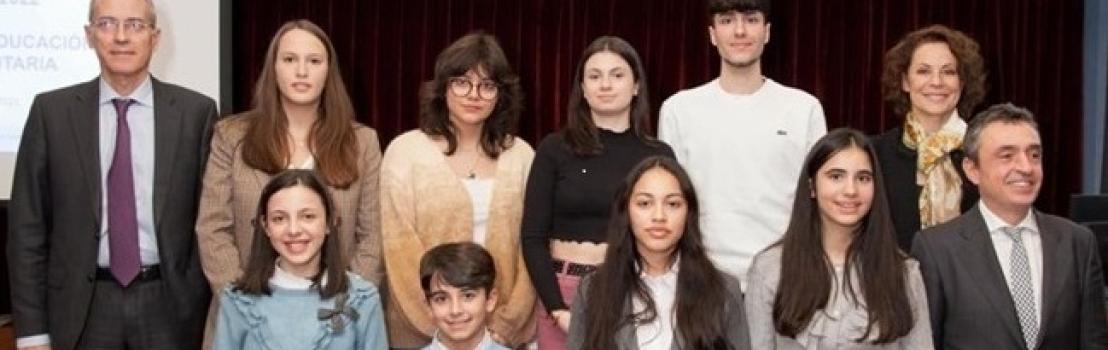
The three winning students, who last year attended primary and secondary schools in Ávila and Pontevedra, received, like the finalists, the awards in a ceremony attended by family members and teachers.

After the presentation of the prizes by the Secretary of State, Jesús Gascón Catalán, and the Director General of the Tax Agency, Soledad Fernández Doctor, the schoolchildren read and presented their works, chosen from among those previously selected by the different territorial delegations of the Agency.

The winning and finalist works are published in the AEAT's Civic-Tax Education Program Portal.

The holding of the contest is part of a series of measures aimed at reinforcing the Civic-Tax Education Program that the Agency has been developing since 2003 and which it plans to intensify and develop, in accordance with the 2020-2023 Strategic Plan.

The program involves the participation of officials who give talks to students in the last years of primary education, ESO, Baccalaureate, Vocational Training and universities. The activities carried out in the centers are complemented by training activities for teachers and open days for schools in the Agency's 52 provincial delegations.

Last year, 255 trainers from the different territorial delegations of the AEAT have given more than 2,500 hours of training to more than 53,000 students, thus exceeding the training capacity prior to the reduction of this activity that occurred in 2020 and 2021 as a result of the COVID-19 health crisis.

The aim of these talks is to explain to the younger ones the social sense of paying taxes and their correspondence with public spending, as well as the damage that tax fraud entails for society as a whole.

It is thus understood that the incorporation of civic-tax education contents from school to university helps young people to develop a solidary behavior. The works selected for this national contest incorporate these messages and show the need for an ethical correspondence between personal interests and common benefits in a society.

October, the month of Financial Education in Italy

Editorial Team


In Italy, every year in October, the Minister of Economy and Finance organizes the month of Financial Education. The topic of this edition was "Build today what matters for your future" ("Build today what is important for your future") and many organizations have scheduled meetings and conferences, online and in presence, on finance, insurance and social security throughout Italy.

The opening event was the World Investor Week, organized by the National Commission for Enterprises and the Stock Exchange (Consob). Other topics organized concerned the insurance training day (October 19) and the retirement training week (October 24-30).

Italian Revenue Agency carried out many of these initiatives in collaboration with other administrations, and stakeholders.

Our Regional Directorates of Sicily, Abruzzo, Campania, Emilia Romagna, Sardinia, Tuscany and Veneto have been involved in these events.

The meetings were for families, children, young people and teachers.

Creativity has prompted our colleagues in new activities. Some colleagues have delved into the taxation for the new jobs, such as blogger, YouTuber, influencer, etc. Others colleagues have invited boys and girls to paint a "mural" supported by a street artist; other still others talked about financial instruments and tax law, or tax breaks for the purchase or for the renovation of a house, and much more.
 

PECT Balance curso 2021/2022 en Cádiz, España

El PECT en la Delegación de Cádiz sigue superándose año tras año. Este curso 2021-22 hemos llevado la Educación Cívico-Tributaria a 350 Universitarios, 2.250 alumnos de ESO-BACHILLERATO-CICLOS FORMATIVOS y 1.100 alumnos de Primaria.  Se ha impartido un seminario PECT en el Centro de Formación del Profesorado (CEP) que ha incluido esta sesión como actividad formativa del profesorado y a la que asistieron representantes de 25 centros de toda la provincia y niveles educativos

Language
Español

ESPAÑA - La Delegación Especial de la Agencia Tributaria en Valencia imparte Educación Cívico-Tributaria en la Escuela de Negocios-ESIC

La Agencia Tributaria, en el marco de la colaboración con las Universidades españolas, imparte habitualmente charlas con el objetivo de trasmitir a los alumnos los valores de responsabilidad fiscal e informarles sobre las posibilidades de Empleo Público en la AEAT.

Dentro de esta colaboración, el pasado 3 de mayo la Delegación Especial de Valencia impartió una charla del Programa de Educación Cívico Tributaria de la Agencia Tributaria a los alumnos de 1º de International Business de la Escuela de Negocios ESIC- Campus Valencia, con muy buena acogida por parte tanto de alumnos como de profesores.

La Constitución Española proclama en su artículo 1.1 que “España se constituye en un Estado social y democrático de Derecho”. En esta concepción del estado social, que cuida de sus ciudadanos, se invitó a los alumnos a reflexionar sobre el carácter esencial de la contribución al gasto público.

Profundizando en esta idea, se les explicó a los alumnos el contenido del artículo 31 de la Constitución Española, que establece que "El gasto público realizará una asignación equitativa de los recursos públicos...”. Este principio de equidad y de justicia del gasto público supone la garantía de una satisfacción de las necesidades públicas que los servicios públicos del Estado ha de prever como garantía del Estado de Bienestar.

Por otro lado, el mismo artículo 31 de la Constitución Española recoge el principio de generalidad, por el cual "Todos contribuirán al sostenimiento de los gastos públicos de acuerdo con su capacidad económica mediante un sistema tributario justo inspirado en los principios de igualdad y progresividad que, en ningún caso, tendrá alcance confiscatorio".

Los alumnos aprenden cómo ellos mismos contribuyen, de acuerdo con su capacidad económica y a través del pago de los distintos impuestos, a la obtención de ingresos públicos, y qué tipo de sociedad existiría en caso de no pagar impuestos, con el fin de mejorar la concienciación fiscal para impulsar el cumplimiento voluntario de las obligaciones tributarias.

Durante la sesión se explicaron cuáles son las funciones de la Agencia Tributaria para cumplir su misión de aplicación del sistema tributario estatal y aduanero, la lucha contra el fraude y la asistencia al contribuyente, así como los Códigos de Buenas Prácticas Tributarias (cumplimiento cooperativo).

Se les mostró el Portal TAXEDU en el marco de la Unión Europea, donde se accedió a contenidos que resultaron interesantes y amenos, tanto para los alumnos como para el profesorado, siguiendo las innovaciones de aprendizaje mediante gamificación recomendadas por la OCDE en materia de educación cívico-tributaria.  

Los alumnos mostraron también especial interés en las operaciones virtuales y en el comercio internacional, así como en las posibilidades de empleo público para trabajar en la Agencia Tributaria.

La sesión fue muy participativa y con gran interacción por parte de los alumnos.


Language
Español
Subscribe to